The English Study Programme offers a pathway to upper secondary education for young people whose command of Finnish is not yet sufficient to enable them to study at a Finnish-language upper secondary school. However, students on the programme study Finnish as a second language and sit the Finnish as a Second Language and Literature exam as part of the matriculation examination.
A total of 27 students, hailing from many different countries and cultures, began the English Study Programme this autumn. Some of the students also come from Finnish families who have, for example, lived abroad for much or all of the student's school years. The Finnish education system and Finnish upper secondary school studies are completely new to many of them.
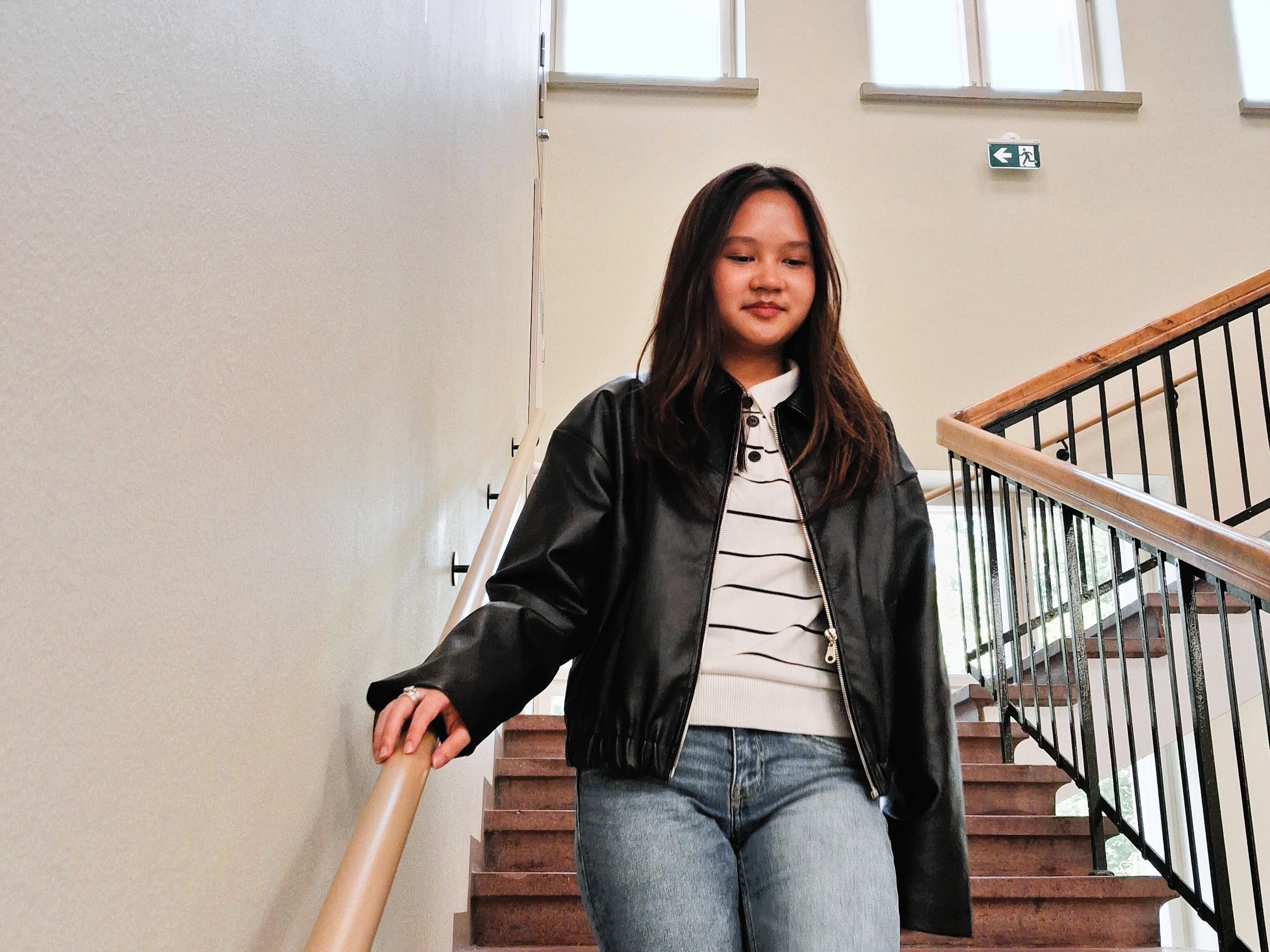
One of the students on the new English Study Programme is Amanda Elizaga, originally from the Philippines, who moved to Finland in 2023. Her mother had arrived in Finland a year earlier to study nursing and now works as a care assistant. Before enrolling to Pyynikki Upper Secondary School, Amanda studied at The Finnish International School of Tampere (FISTA).
Amanda says she has noticed major differences between the Finnish and Philippine school systems.
– In the Philippines, pupils usually stay in the same class and teachers move from one class to another. In Finland, on the other hand, pupils move between different classes depending on their lessons. The atmosphere at school also feels different. In the Philippines, studying was quite strict and high-pressure, whereas in Finland it’s more relaxed and leisure time is valued more,’ Amanda explains.
Christopher Smith, who works as a form tutor for the English Study Programme, believes that studying in English at Pyynikki Upper Secondary School provides students with enriching interaction in both directions.
– For many, studying in Finland gives them a perspective on how things can be done differently from what is typical in their home country, and, in turn, the students’ unique, culturally-based perspectives highlight their individual strengths for the benefit of the group. So everyone has their own story from which others can learn. On the ESP programme, diversity and variety are genuinely valued as assets, she notes.
Upper secondary school helps you find your own path
Amanda explains that she chose to study at upper secondary school after discussing her future with her study counsellor.
– I wasn’t quite sure yet what I wanted to do in the future. Upper secondary school seemed like a good option because here you get more time to think about your own plans, she says.
In her spare time, Amanda enjoys dancing and drawing. She considers the opportunity to study at a Finnish upper secondary school in English to be extremely important.
– I’m really glad that a programme like this exists. It also gives opportunities to young people who don’t yet speak Finnish very well but want to experience a Finnish upper secondary school, Amanda sums up.
According to Amanda, studying in English has gone well, but learning Finnish makes her feel a little nervous.
– The teachers speak English well enough, so it’s easy to follow the lessons. The Finnish as a second language matriculation examination feels a bit daunting at the moment. However, it’s nice that we’re starting with the basics and that we can review things at a comfortable pace,’ says Amanda.
The English Study Programme complements Pyynikki Upper Secondary School’s international educational offering. The school also runs the Bilingual Study Programme, in which the main language of instruction is Finnish and the support language is English. Students on the Bilingual Study Programme sit the Finnish-language matriculation examination.
The common aim of the international programmes is to provide high-quality upper secondary education for young people from international families and to support their readiness for further studies in Finland. During their time at the school, students on both programmes significantly improve their Finnish language skills and become familiar with Finnish society.
–The English Study Programme has attracted a great deal of interest, and enquiries about places continue to come in daily. We have already been asked several times about next spring’s joint application process. There is a clear need for a programme of this kind, and, together with the bilingual programme, it strengthens Tampere’s appeal amongst both returnees and international families, explains Samu Virpimaa, Coordinator of the English Study Programme.
Only applicants who have completed up to three years of basic education in Finland are eligible for the English-language programme. Applicants admitted to the English-language upper secondary programme who are not EU/EEA citizens must have been granted a residence permit for reasons other than study. Applications for the programme are made through the joint application system.