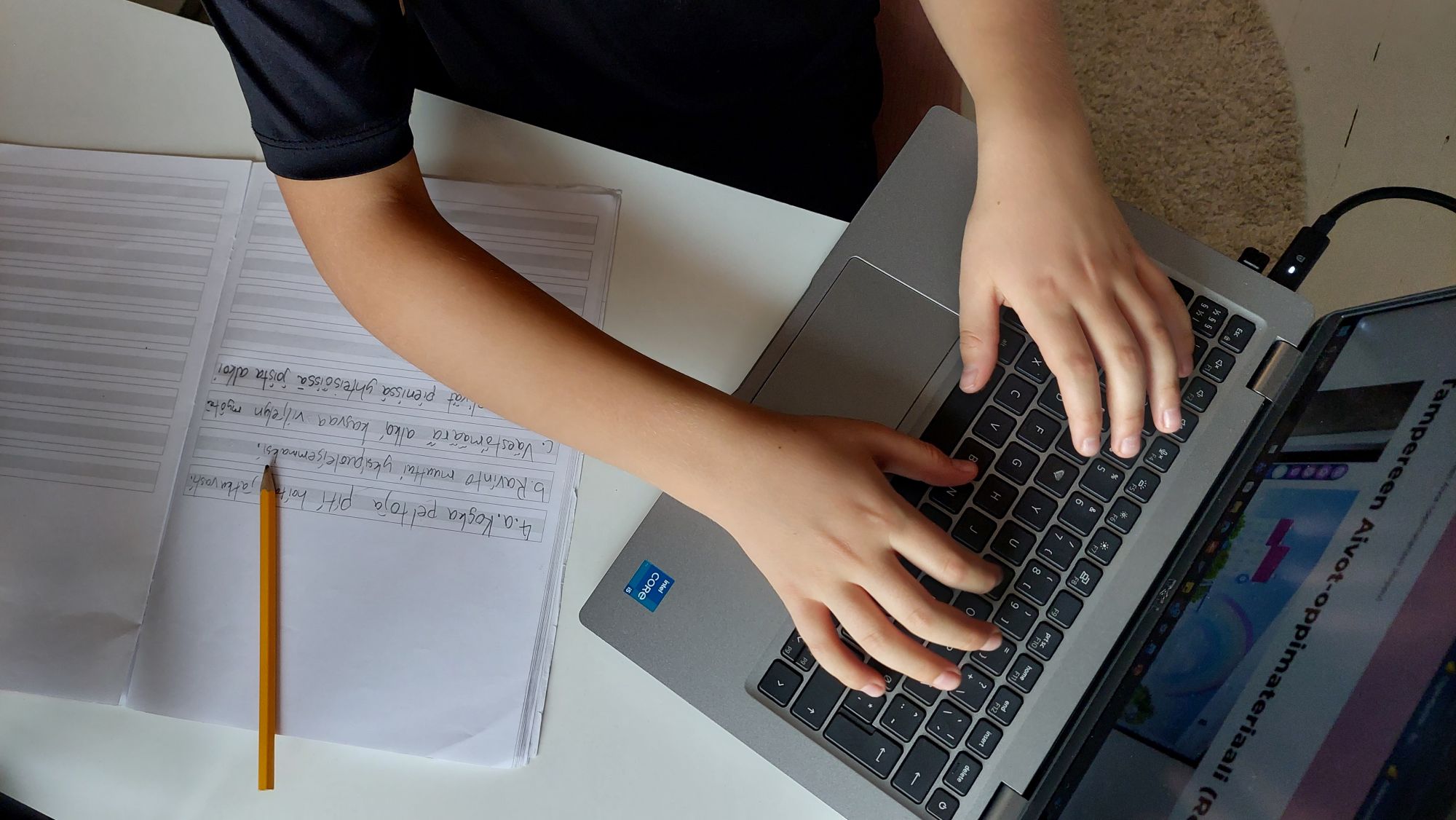
The City of Tampere’s first Digital vision for Education and Upbringing sets the direction for digital development until 2035. The vision is:
“We learn and utilise digitalisation in a smart and collaborative way – individually, collectively and equally.”
The digital vision covers the learning journey of children and young people in Tampere from Early Childhood Education through to general upper secondary or vocational education. The City of Tampere will define the digital skills to be taught at each stage of education and for each age group. This will help ensure equal opportunities for learning and smooth transitions from one stage of education to the next.
Simo Turtiainen, Head of Basic Education, points out that although many children and young people use digital services every day, they still need guidance in areas such as digital literacy, evaluating information, staying safe online and using different digital systems.
– Children and young people are living in a more diverse digital environment than at any time in history. We want to teach them the skills they need to operate safely and learn new things, adds Turtiainen.
Pedagogically appropriate use of digital technology supports the joy of learning
Learning is at the heart of Tampere’s Digital vision for Education and Upbringing. Digital technology provides professionals with tools for differentiation, interaction and supporting participation. At the same time, human interaction remains at the heart of education and teaching. The aim is not to use more technology, but to use it more wisely.
– Digital technology is utilised, for example, to build personalised learning pathways and to support learning in the face of various challenges. Everyone deserves to experience the joy of learning, says Turtiainen.
Turtiainen also stresses that traditional literacy and digital literacy should not be seen as competing skills.
– Children and young people need both strong traditional literacy skills and good digital literacy skills. They complement one another.
First steps have been taken
The digital vision was approved by the City of Tampere’s Education service groups in spring 2026, and implementation is already under way. In Early Childhood Education and Pre-primary Education, staff digital skills have been developed in recent years, and this work will continue in line with the digital vision.
In basic education, digital skills frameworks have been introduced to define the skills pupils should acquire at each year level. Pupils in both primary and lower secondary schools are also revisiting essential digital skills and shared ways of working.
Schools will also teach pupils how to use AI and develop the skills needed to work with it at different year levels. Staff digital competence will also continue to be strengthened.