
Culture and veterans’ work remain close to the heart of Tampere Award recipient Aimo Reinikainen
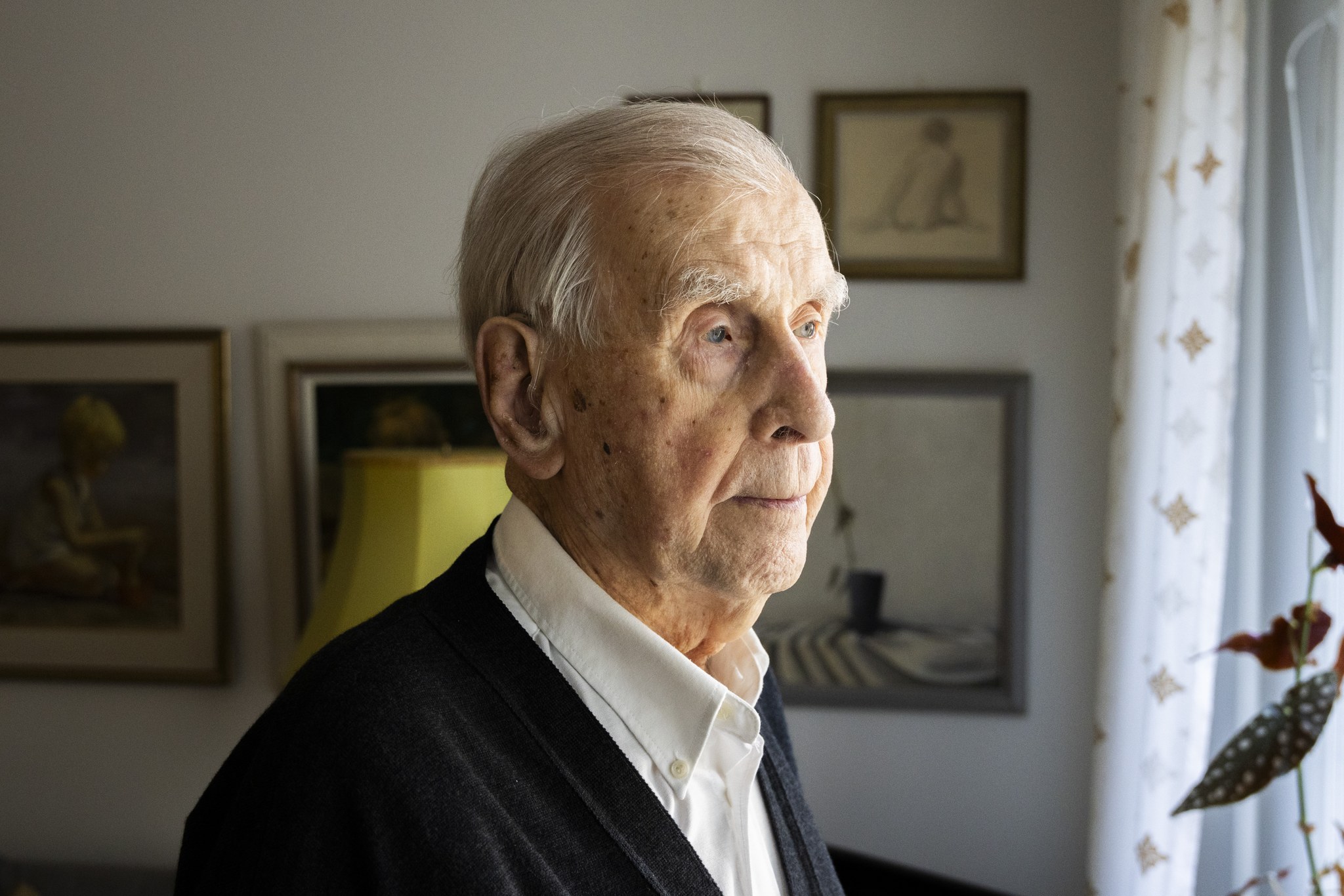
Aimo Reinikainen welcomes us into his cosy home in Tampere, where the walls are filled with art and the window looks out onto lush greenery.
– Trees, parks and forests are important to people – all the more so now, with the changing climate, Reinikainen reflects.
Having lived in Tampere since 1945 – “longer than most people in Tampere”, as he points out – Reinikainen knows the city well. After the war, he had to choose between studying in Tampere and Helsinki.
– I knew Helsinki well, but hardly knew Tampere at all. Even so, I chose to come here, and it proved to be an excellent decision. I had many opportunities to move to Helsinki during my career, but I never felt the need. As the old saying goes, I would rather be a master in Tampere than a servant in Helsinki, he says with a smile.
Reinikainen’s affection for Tampere is also evident in his many years of service on the board of Tampere-seura. Over the decades, he has been active in numerous other Tampere associations and organisations. He continues to take a keen interest in the city’s sporting and cultural life.

Reinikainen is pleased with the way Tampere has developed. The city has changed beyond recognition since he first arrived, and the establishment of the School of Social Sciences in Tampere was particularly significant.
– I think that, of Finland’s major cities, Tampere has developed the most since the war.
Forging links between business and higher education after the war
In 1942, at the age of 18, Reinikainen was sent to fight in the Continuation War. He says there was nothing remarkable about leaving for the front; at the time, it was simply what young men did.
– In wartime, troops are sent wherever they are needed most. My own military service was fairly short compared with that of those who had been there from the start of the war, or even since the Winter War, he says modestly.
Nevertheless, Reinikainen has received several honours for his service.
After the war, Reinikainen trained as an engineer in Tampere. He began his career as an assistant and teacher at Tampere Technical College. He later worked at Tampere University of Technology as a specialist lecturer and laboratory engineer, and finally as chief engineer until his retirement.
He regards his role in establishing cooperation between Tampere University of Technology and the business community in the 1980s as his most important professional achievement. Such partnerships are now commonplace, but at the time the university was a pioneer.
– There was considerable debate at the time about whether universities should carry out research for companies. But that was where the funding came from. The drawback for researchers, of course, was that whenever one project ended, they had to find a new funder and a new research topic, Reinikainen recalls.
A lasting love of visual art and classical music
When Reinikainen retired in 1990, he had no particular plans. Veterans’ work soon gave him a new sense of purpose.
Over the years, he has represented war veterans and spoken at numerous events, including wreath-laying ceremonies, meetings with school pupils and National Veterans’ Day commemorations.
– Veterans’ work has been tremendously rewarding and has introduced me to many people from across Finland, he says.

As he has grown older, many of his other hobbies have fallen away, but his interest in culture has endured alongside his veterans’ work. Visual art and classical music are especially dear to him. He first attended a concert by what was then the Tampere City Orchestra – now the Tampere Philharmonic Orchestra – in October 1947. He has since attended hundreds of concerts.
Exercise and a positive outlook have served him well
At 102, Reinikainen is inevitably asked the secret of a long life. He says he has never smoked, has rarely drunk alcohol and has always been physically active.
– When we were young, we usually travelled under our own steam. There were few cars or mopeds, and even owning a bicycle was a big deal.
He also believes that a positive outlook on life matters.
Reinikainen is troubled by the current state of the world. He fears that something terrible could happen by accident, without anyone intending it. The situation is uncertain, and no one seems fully in control.
– Wars have become increasingly brutal. People in cities far from the front are no safer than those on the front line.
Even so, he does not see the situation as hopeless – or even unprecedented.
– There have always been situations involving the threat of war, and people have wondered what would happen. In my view, national leaders must always do everything in their power to prevent war.


