
The European Capital of Smart Tourism Year Opened the Door to European Tourism Cooperation for Tampere
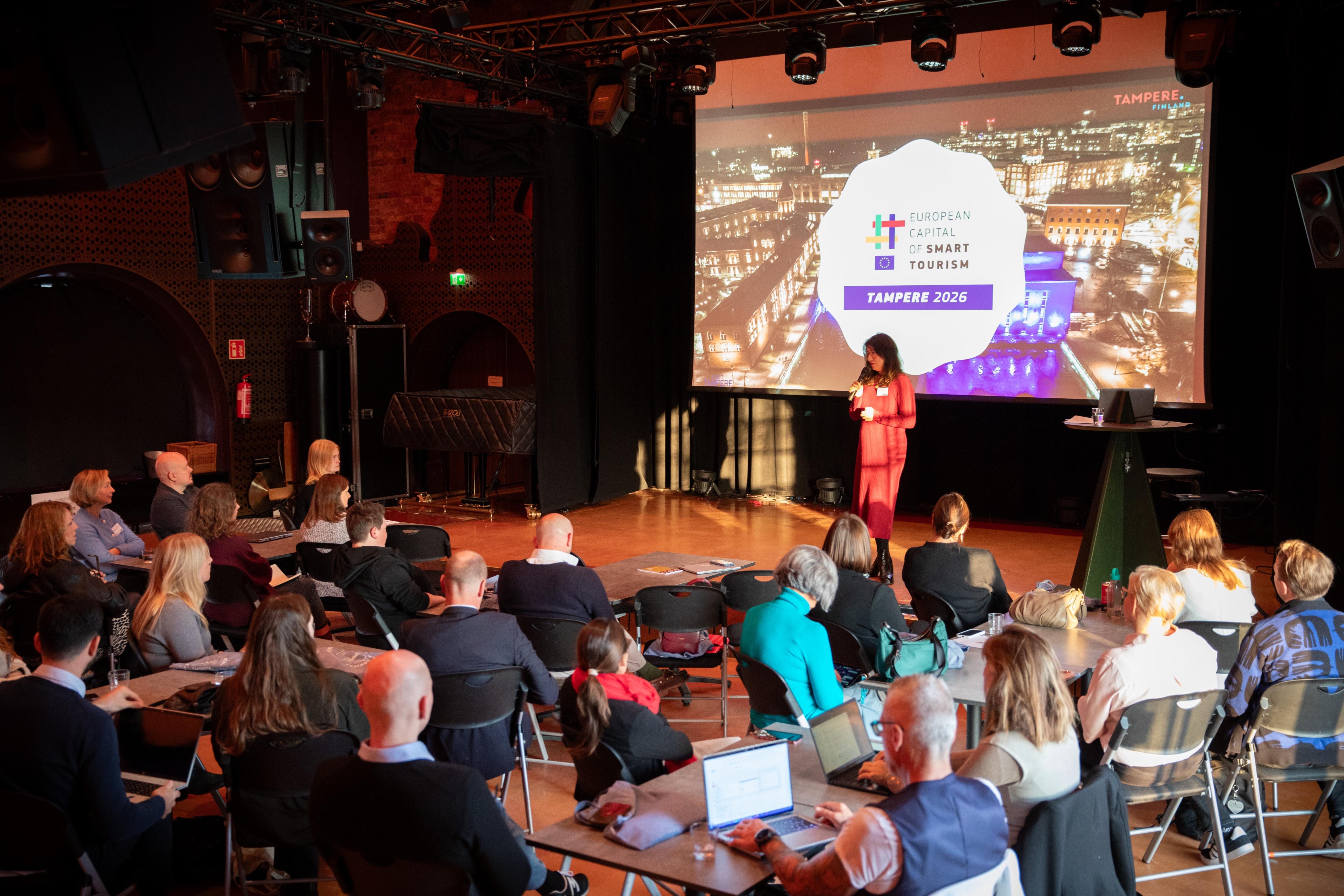
The workshop, Connecting Northern and Southern Europe Through Tourism Indicators: Predictive Approach and Resilience, brought together representatives from the European Commission’s tourism unit, experts from approximately fifteen European tourism cities, as well as representatives from Visit Finland, the City of Tampere, and Visit Tampere. This cooperation was further reinforced through a workshop held in Tampere in October, the outcomes of which contributed to the preparation of the European Commission’s new tourism strategy.
Cities seeking solutions together
The tourism landscape is changing rapidly, yet many challenges are shared across Europe. For this reason, participants saw value in exchanging experiences and exploring solutions together.
– International cooperation is important because it brings together cities facing similar challenges, enabling them to exchange ideas, learn from each other, and develop solutions collaboratively. Face-to-face meetings are particularly valuable, as they create stronger engagement and more meaningful cooperation than online formats, says Vlaho Margaretic, Senior Tourism Advisor Specialist at the City of Dubrovnik.
Margaretic represents Dubrovnik, which serves as the European Green Pioneer of Smart Tourism 2026. According to him, European Commission-supported networks are valuable not only because they facilitate collaboration between cities, but also because they bring local experiences into European decision-making.
– Cities can share their experiences, develop solutions together, and ensure that local perspectives are considered in European tourism policy, Margaretic says.
The capital year opened doors to european networks
One of the most significant achievements of Tampere’s year as the European Capital of Smart Tourism has been strengthening cooperation between tourism cities in Northern and Southern Europe. Initiated by Tampere, the collaboration has brought together cities facing very different tourism challenges but with much to learn from one another.
– Tourism challenges vary considerably across Europe. While some destinations struggle with strong concentrations of visitor numbers and seasonal peaks, international accessibility remains a key challenge in the north. It is precisely these differences that allow us to learn from one another, says Maiju Viiki, Account Manager at the City of Tampere.
The Smart Tourism title has played a key role in enabling this collaboration
– The European Capital of Smart Tourism year has provided Tampere with visibility, opened access to new European networks, and strengthened our position as a frontrunner in smart and sustainable tourism. We have had the opportunity to discuss the future direction of tourism at the highest EU level and bring a Northern European perspective to the table, Viiki explains.
– Over the course of the year, it has become increasingly clear that Tampere’s approach to combining data, digitalisation, sustainability, and business collaboration is exceptionally advanced by European standards. Many solutions that are already a normal part of everyday operations in Tampere represent the next stage of development for numerous European destinations, says Anna-Krista Sorvoja, Chief Development Officer at Visit Tampere.

Smart Tourism Sparks Interest Across Europe
Tampere’s approach to tourism development has attracted attention from other European cities.
– Tampere is leading the way particularly in the sense that smart tourism is not about individual technological solutions, but rather an integral part of the entire tourism development model. Data, sustainability, digital customer experiences, and business development are advanced simultaneously. This holistic approach has generated interest across other European cities as well, says Sorvoja.
According to Viiki, smart tourism is ultimately about the value tourism creates for both visitors and local communities.
– For us, smart tourism is not just about technology. It means developing tourism in a sustainable, accessible, and creative way. The goal is to create a better visitor experience while generating value for local businesses and residents alike, says Viiki.
Sauna Provided a Unique Setting for Networking
In addition to the workshop sessions, participants had the opportunity to explore local culture, the experience economy, and Tampere’s tourism attractions.
Finnish sauna culture left a lasting impression.
– The sauna experience exceeded expectations and became one of the highlights of the workshop. It offered participants an authentic insight into Tampere and Finnish culture, creating a memorable shared experience that brought people together. It added unique local value to the event and helped visitors connect with the city in a genuine way, Margaretic says.
Cooperation Will Continue Beyond the Capital Year
In Tampere, the Capital Year is not seen as a stand-alone project but as part of a long-term commitment to international cooperation.
– From the very beginning, it was important for us that Smart Tourism would not remain a one-year initiative. The most valuable legacy consists of the networks we have built, the visibility we have gained, the new expertise we have developed, and the direct connection we have established with European tourism development. These are assets we intend to build on in the years ahead, says Viiki.
The next step is to bring regional tourism businesses more actively into international networks, pilot projects, and skills development initiatives.
– The next phase is to engage more tourism businesses in international networks, pilot projects, and competence development. Our goal is to ensure that the benefits of the Smart Tourism year translate as concretely as possible into stronger competitiveness, international connections, and new business opportunities. The Smart Tourism year has demonstrated not only that Tampere is doing the right things, but that it is doing them at an exceptionally high level in a European context, Sorvoja concludes


