
The Luku/hommia project develops a wide range of skills among fourth-grade pupils
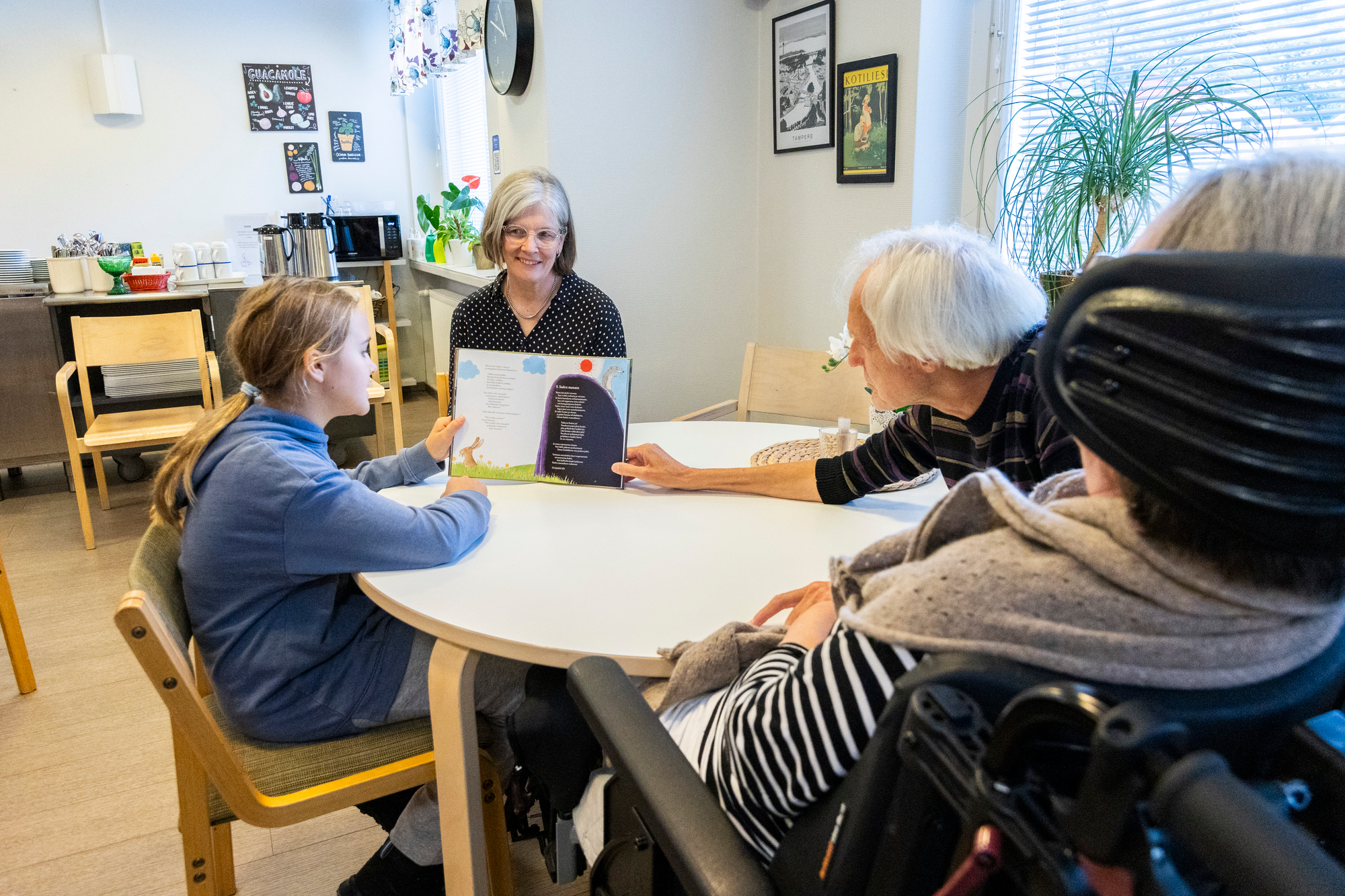
A group of third- and fourth-grade pupils from Juhannuskylä School gathers in the entrance hall of Petsamotalo under the guidance of their teacher, Päivi Nurminen. Half of the mixed-age class has come to read to the residents. The pupils pair up and spread out among the dining-room tables, where residents are already waiting for them.
This is the second reading visit by pupils from Juhannuskylä School to Petsamotalo, and the residents have fond memories of the first. Once again, they listen attentively as pairs of pupils read books to them. From time to time, they also ask the pupils how they are getting on.
– This is an extremely welcome opportunity for the school – exactly the kind of activity we have been considering ourselves. The pupils get to meet people of different ages and read without fear of criticism. We walked here, so the visit also supports the Lupa liikkua activities. The project combines everyday physical activity, reading and social interaction, says Nurminen.
Working life and entrepreneurship education is part of basic education
– The Luku/hommia working life project is part of working life and entrepreneurship education in basic education, which is itself part of the city-wide approach to working life and entrepreneurship education, says Ville Lähdesmäki, Working Life Educator in Basic Education at the City of Tampere.
Thirteen classes have signed up for the project this autumn.
In Tampere, working life education has been developed into a learning pathway ‘from toddlers to doctors’. The Luku/hommia project helps to meet the pathway’s objectives for fourth-grade pupils in basic education. Key objectives include developing literacy and financial skills, meeting different people and working with them. The concept also increases physical activity during the school day, while the journey gives pupils an opportunity to observe the natural environment around them.

According to Lähdesmäki, the aim is for pupils to recognise their own strengths and abilities and to receive support and encouragement from adults in identifying them.
Pupils should also understand the importance of perseverance, working life and entrepreneurship skills, and their own attitude, while continuing to develop these skills. They gain experience and the capabilities needed to participate in working life, while building confidence in their ability to succeed.
Experts teach financial skills
The project also teaches pupils financial skills. Nordea is the City of Tampere’s partner in providing financial education. The aim is to help pupils understand spending, saving and how their choices affect everyday life.
In the autumn, experts from the bank’s Tampere branch visit schools to deliver a lesson on managing personal finances. Using examples from their own everyday lives, pupils consider spending and saving.
– Financial education themes run throughout the school year. Pupils examine the prices of different products and services and discuss how their choices can affect consumption and everyday costs, explains Kati Kemell, Community Engagement Manager at Nordea.
In the spring, the class returns to financial education in a follow-up lesson led by the teacher, during which pupils consolidate their learning by playing the Taloussankari Junior game. Each class also has its own project in which pupils plan how to use the donation received in return for their reading to fund an enjoyable activity.
Visits to care homes for older people develop social and literacy skills
– When developing the Luku/hommia concept, it was important for the activities to be based on the objectives of the curriculum and to support everyday school life. The starting points are the promotion of literacy and financial skills. VALLI – The Finnish Union for Senior Services was selected as a partner. With its help, organisations were found to make donations in return for the pupils’ work, says Salla Saikkonen, a tutor teacher involved in developing the project.
– From a teacher’s perspective, the most rewarding aspect was seeing the pupils develop their interaction and presentation skills. They also became more motivated to put effort into producing their own texts, gained confidence in expressing themselves and received plenty of positive feedback during the visits, she says.
Virpi Dufva, Executive Director of VALLI – The Finnish Union for Senior Services, is pleased with the project and the cooperation it has created.
– One area of our work is increasing shared participation between generations, and the Luku/hommia project is an excellent example of this. Children’s visits to care homes bring variety and joy to older people’s days. The encounters also bring back memories of their own children and grandchildren. Both generations have found these encounters positive and welcome.
Residents praise the pupils’ confidence and enthusiasm
The reading session at Petsamotalo is drawing to a close. Elmeri and Oiva Aaltonen have already moved on to chatting with the residents about other things. Like many others, I assume that the boys are brothers.
– We’re not related, as far as we know, but we met at nursery. It did take us a few years to realise that we had the same surname, the friends say, laughing.
Ilkka Östring, who has been listening to them, thinks the reading went very well.
– The boys read really well. They’re confident lads – ten out of ten, says Östring.

At another table, Leino Sandhu and Sofia Constantin have entertained Toivo Palonen and Matti Katajisto with their reading. The children confidently ask the men about their favourite foods, which turn out to be meatballs. The men also praise the children’s confidence.
– It’s wonderful that there are girls like these. They have learnt to read extremely well, and these reading sessions make a pleasant change.


