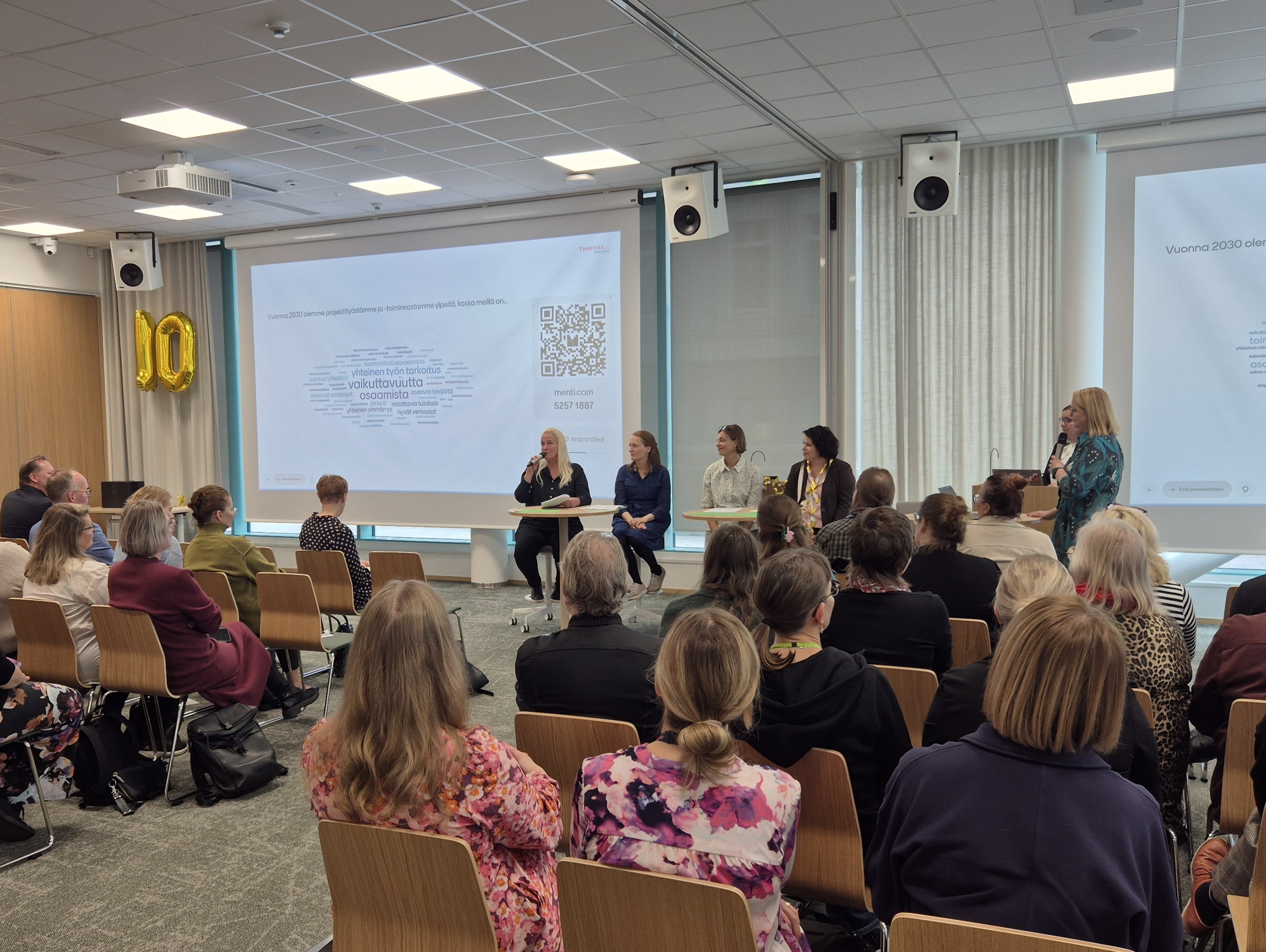
The Project Arena event was the premiere of a video telling the story of the city's project activities and the founding of the Project Management Office. This humorous short film, produced by the Project Management Office, effectively illustrates the significance of the Project Management Office’s decade of work and how projects used to be carried out in isolation from one another.
Sirpa Kolehmainen, the development manager who launched the Project Management Office and currently heads Pirha’s Project Management Office, recognized the era depicted in the video.
– Everyone was grappling with the same problems on their own, and management didn’t have an overall picture of project activities, Kolehmainen recalls of the situation ten years ago.
Today, according to Kolehmainen, Tampere is a pioneer, particularly in portfolio management, meaning that management teams lead projects strategically.
– Another major and important factor is the Project Experts -network, which seems to work extremely well in Tampere, Kolehmainen continues.
At the event, active members of the City of Tampere’s Project Experts -network, as well as the chairs of the development group and project managers Maarit Vehviläinen and Hannu Sievänen, spoke about the significance of the network. According to them, the importance of joint development and sharing the day-to-day realities of project work cannot be overstated. Project work is, above all, about collaboration, and project managers should not be left to work alone.
In the future, project managers will lead people and drive change
The expert panel, moderated by Strategy Manager Nina Mustikkamäki, featured Riina Hiipakka-Lahti, Head of the Tampere Project Management Office and Development Manager, Sari Hannila from Turku and Päivi Hoverfält from Espoo, both representatives of project offices, and Anne Isotalo from the Association of Project Professionals.
The panelists also emphasized the importance of community and collaboration in modern project work. A sense of community was also seen as a strength for project staff.
The discussion also highlighted the importance of projects as drivers of strategic change within municipal organizations. It was considered crucial that the impact and benefits sought through a project be integrated into new, everyday practices already during the project’s implementation.
As artificial intelligence helps accelerate many of a project manager’s tasks, time is freed up for the most important task of the project manager of the future: leading people and driving change.
The audience also had the opportunity to participate in the panel discussion. The audience, consisting mainly of project professionals, agreed, among other things, that the lack of resources is the biggest obstacle to project work. The panelists commented that, ultimately, a lack of resources is always a matter of leadership.
The goal is professional, impactful, and respected project work
Riina Hiipakka-Lahti, who has now led the Project Management Office for three years, aims to ensure that the project work carried out in Tampere will be professional, impactful, and highly regarded in the future. The audience also expressed similar hopes for the future.
In her closing remarks, Nina Mustikkamäki summarized the future needs of project work as follows: expertise, a shared direction under leadership, and the importance of collaboration and partnerships. Projects are increasingly part of broader initiatives that are carried out in collaboration across the entire organization, as well as with local, national, and international partners.