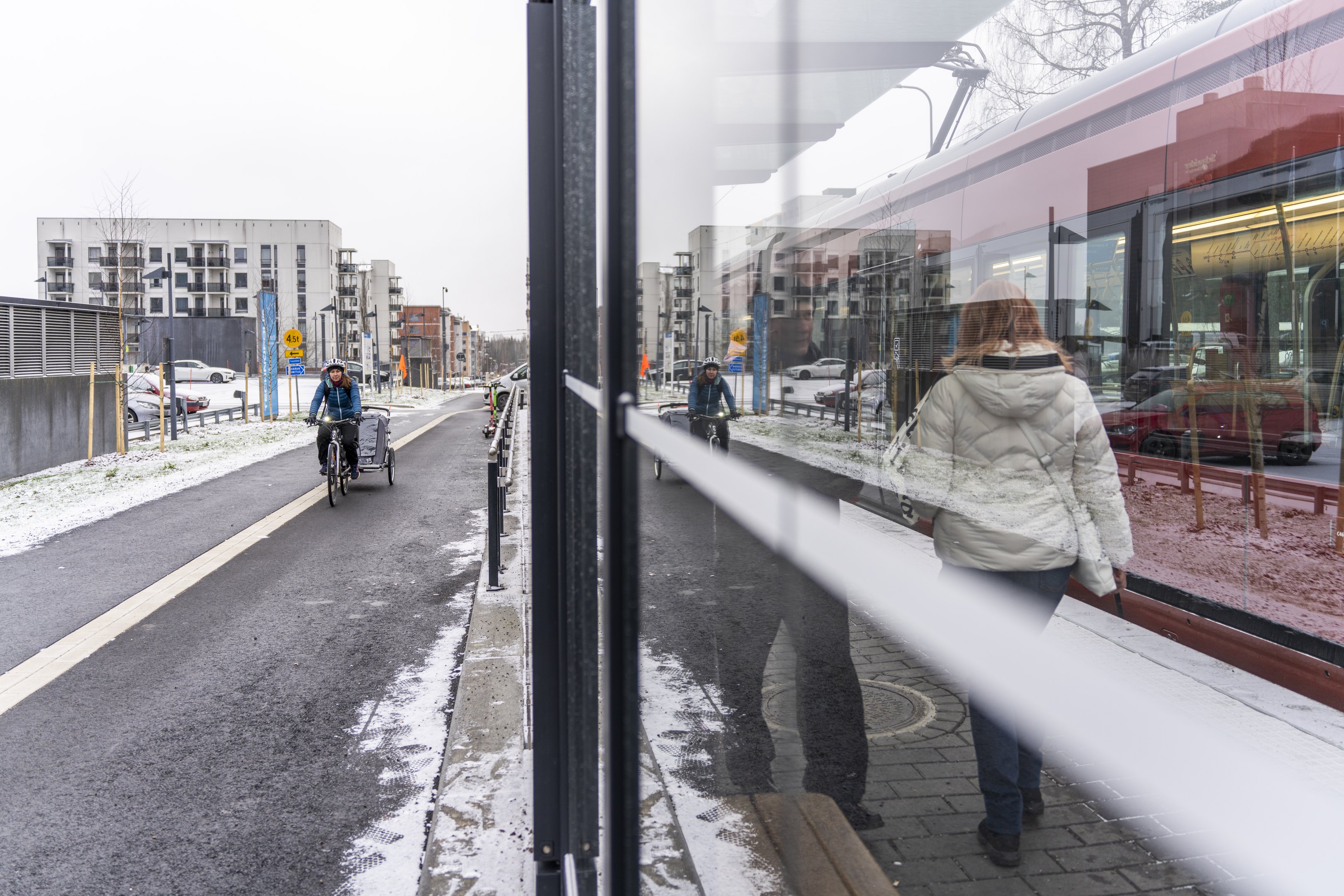
Achieving climate neutrality is within reach: Tampere targets 64% emissions reduction by 2026
The Climate Budget helps the City of Tampere monitor progress towards the 2030 climate neutrality target and the resourcing of climate actions. In 2026, the total maximum emissions must not exceed 465,000 tons of carbon dioxide equivalent (t CO2e), which is 64 percent of the 1990 emissions level. In order to reduce regional emissions, measures to reduce emissions must continue to be implemented in a systematic manner.
Climate emissions from electricity consumption and district heating in Tampere will continue to decline, which will contribute to a reduction in overall emissions in the coming years. Emissions from electricity production and consumption have decreased faster than expected due to the increase in renewable and emission-free electricity production and the decrease in the use of fossil fuels. Electricity consumption is likely to achieve sufficient reductions in relation to emission targets even before 2030.
In recent years, significant investments have been made in district heating production to reduce emissions. The commissioning of the Naistenlahti 3 power plant and an electricity storage boiler, as well as the withdrawal from the use of peat, have reduced emissions. Emissions are expected to continue to decline in 2025–2026 with the introduction of a new heat pump plant, a district heating accumulator, and two new electric boilers in district heating production. The electric boiler uses clean electricity when there is excess production from wind power, reducing the use of natural gas and bioenergy.
However, it will be difficult to achieve the 2030 target for district heating, as waste incineration causes high emissions. Emissions from waste treatment at Tammervoima waste-to-energy plant are currently reported as part of district heating emissions. However, other emissions from Tampereen Energia are expected to decrease by more than 95 percent between 2010 and 2030.
The mobility choices of Tampere residents will determine whether emission targets are achieved
Achieving transport emission goals will require a much faster change in vehicle fuels and modes of transport than has been seen so far. The increase in electric cars will partially reduce road transport emissions. Similarly, the distribution obligation for transport fuels will reduce emissions from remaining combustion engine cars by up to 30 percent by 2030, if the distribution obligation level remains unchanged.
However, traffic emissions will only decrease significantly if more and more Tampere residents switch to public transport, cycling, and walking. This is also because the population of Tampere is growing, and with it the need for transportation. The city can promote change by creating conditions for the use of sustainable modes of transportation and alternative fuels in both passenger and freight transportation.
The city is investing in public transport, energy efficiency, and sustainable construction
The climate action financial plan illustrates how much the city and its subsidiaries plan to spend on measures that, in addition to improving transport services, promoting health, and reducing energy costs, will also reduce climate emissions or promote adaptation to climate change.
The city's (excluding subsidiaries) operating expenses for climate action are EUR 68.5 million in the 2026 budget. Most of the operating expenses will be used to order public transport that runs on clean energy. The budget also includes expenses for the maintenance of walking and cycling paths, city bikes, and the utilization of recycled soil, as well as personnel and planning expenses. In order to balance the budget, the operating expenses presented in the budget will be finalized later in the year when the annual plans are made.
The city will invest €12.0 million in climate action next year. The most significant investments in the climate budget are the construction of walking and cycling paths and bicycle parking facilities, improving the energy efficiency of buildings, constructing wooden daycare centers and schools, and building natural stormwater solutions to adapt to climate change. In relation to the city's total budget, these amounts represent 6.1 percent of operating expenses and 5.2 percent of investments.

Subsidiaries invest in tramways and district heating
The operating expenses of the subsidiaries' climate budget in the 2026 budget are EUR 18.0 million. The investments are EUR 77.7 million (27.3 percent of the subsidiaries' total investments). The most significant investments are the construction of tram infrastructure and the purchase of rolling stock by Tampereen Raitiotie Oy, investments in electric boilers and district heating batteries by Tampereen Energia Oy, network renovations by Tampereen Vesi Oy, Pirkanmaan Jätehuolto Oy's development of its bioplant operations, and energy renovations by rental housing companies.
The estimated emission reduction of the measures in 2026 is 18,900 tons of carbon dioxide equivalent (t CO2e).
The climate budget combines the Climate Neutral Tampere 2030 roadmap and resources
The Climate Neutral Tampere 2030 roadmap presents the key measures that the city's departments and subsidiaries will take to reduce emissions. The 2026 climate budget focuses on the measures in the roadmap, but also includes other key groundwork aimed at reducing or adapting to climate emissions. The implementation of the climate budget will be monitored annually in connection with the financial statements; for 2025, this will take place next spring.
The climate budget has been developed over the past year as part of the international Climate-4-CAST project, which will end in 2026. As a result of the city's financial balancing measures, human resources for climate work management and development will be reduced. In order to continue the development work, efforts must be made to seek increasing amounts of external funding.
Photo changed 10.40.