In the building completed in 1936, it was not possible to make unlimited changes to the interior either. However, a great deal of new features could still be built.
– The biggest changes are probably the new spaces on the ground floor in the wing at the conservatory end, where, in addition to the library and a classroom, we were able to add facilities such as staff social areas, she says.
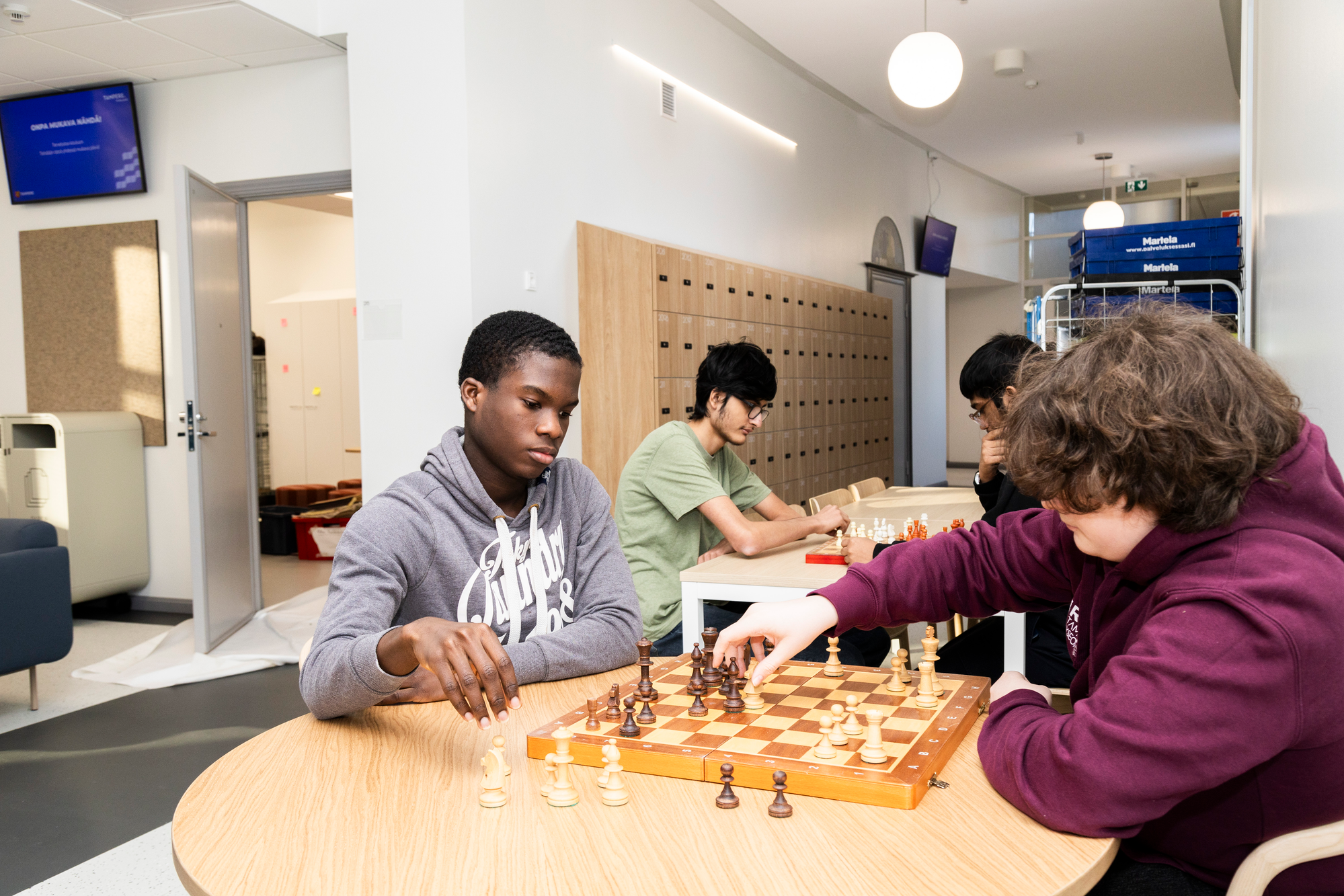
The laboratories were renewed to meet the requirements of the national curriculum and the IB-programme, and an adjoining workspace and preparation area were also added. The spaces have been made more versatile: the dining hall can serve as a learning environment when needed, and some classrooms can be combined into larger spaces, for example to accommodate matriculation examinations. The students’ common areas enable café activities, independent study, and other community-focused activities.
The building will continue to feature some original furnishings. The school’s valuable artworks will also be displayed at some point.
– Original teachers’ desks, cabinets, and other furniture were found in the attic and in the school’s corridors, and some of them have been restored to remind us of the building’s long history. The artworks are still with the conservator, and their display plan will be finalised once the other moving-related tasks ease up, Halme reveals.
The move to Pyynikki has been eagerly awaited at Pyynikin lukio upper secondary school
– The move to Pyynikki has been something the entire Pyynikin lukio upper secondary school community has really looked forward to. Originally, the plan was that we would have been able to move much earlier. Pyynikki offers beautifully renovated historic premises: a spacious, bright and comfortable school building that enables a wide range of creative pedagogical activities, describes Ville Vuorisalmi, Principal of Pyynikin lukio upper secondary school.
According to Vuorisalmi, there have been no surprises, as the building and its furnishings were designed jointly by the school staff and professionals.
– The teachers were listened to very well, and the student council in office during the planning phase was also able to give feedback on the plans and influence them, Vuorisalmi praises.