
Haihara Art Centre presents exhibitions of ink works and Palestinian embroidery in August
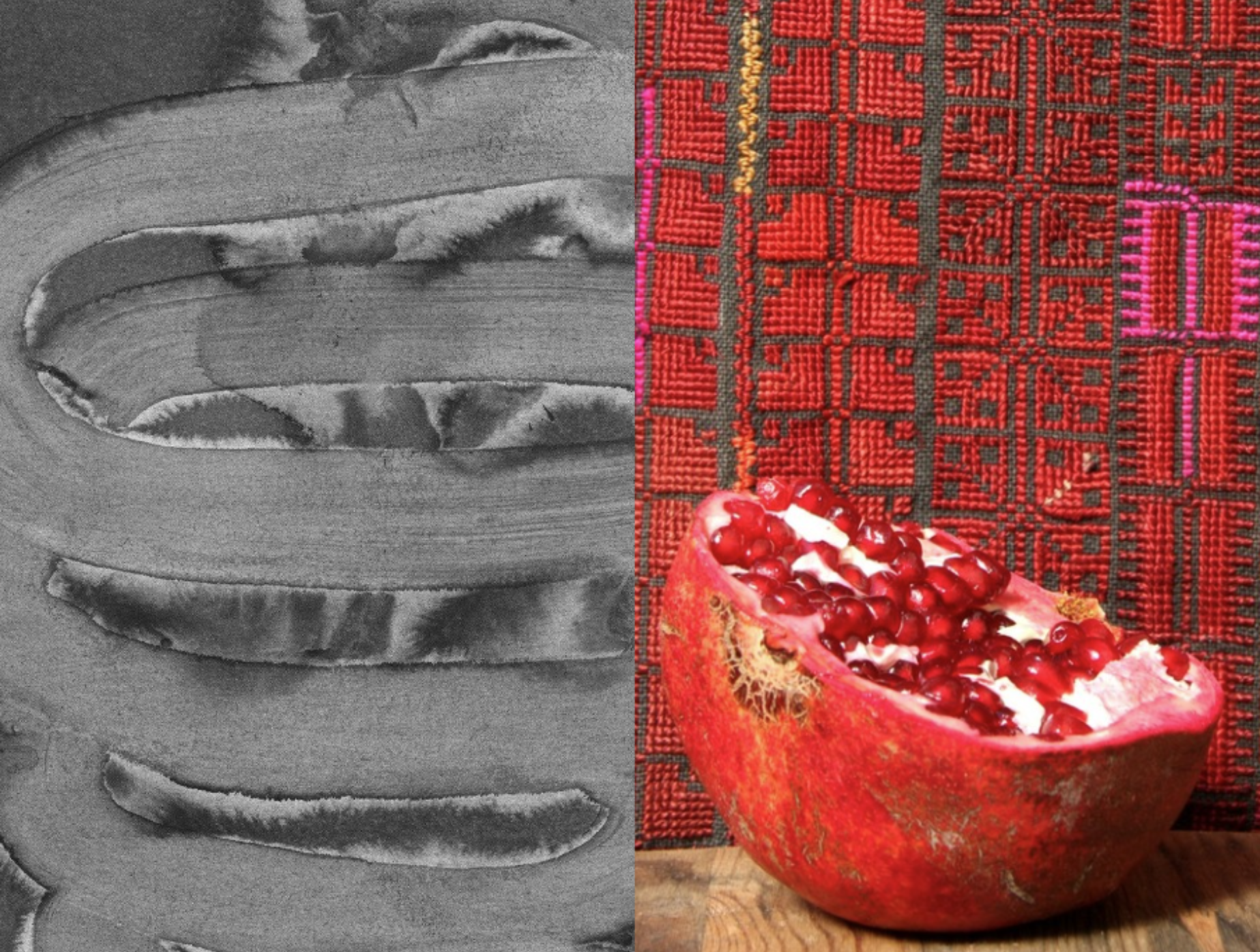
Simon Ertel: Eyes in the Bark
In his exhibition Eyesin the Bark, Simon Ertel (b. 1987) explores the complex relationships intertwined between nature and humanity. His work is inspired by the concept of dark ecology, as described by philosopher Timothy Morton. Through this lens, the artworks address the loss of biodiversity, climate change, the blurring of species boundaries, and the subtle unease that marks the relationship between the organic and the artificial.
At the heart of the exhibition are ink drawings of archaic woven beehives that resemble portraits. The openings in the hives appear like eyes or mouths, giving them a strange, almost human presence. Beekeeping—one of the oldest relationships between humans and animals—serves both as a subject and a metaphor, leading to questions about memory, identity, and humanity’s connection to nature.
The works were created during Ertel’s residency at Haihara in Tampere. The surrounding forests and lakes—both peaceful and enigmatic—have left their mark on the mood of the pieces, bringing with them experiences of silence and solitude. The exhibition invites the viewer into a space where beauty and disturbance meet, and where ancient forms begin to speak of today’s ecological and emotional tensions.
Ertel’s practice combines traditional ink drawing with chemical experimentation, where chance, corrosion, and transformation play a central role. The result is a series of works that move between representation and abstraction—layered, atmospheric, and subtly unsettling
Watan Friendship Association: Tatreez – An Exhibition of Palestinian Embroidery
Palestinian tatreez embroidery is a centuries-old form of folk art traditionally used to decorate clothing and accessories. The patterns are ancient, and each stitch and color carry its own story and meaning—even today. The technical rules and aesthetic standards of tatreez are typically passed down from mothers to daughters. As such, tatreez also serves as a medium for storytelling. Before literacy became widespread, embroidery was a distinctly female way of transmitting knowledge across generations.
In 2021, Palestinian tatreez embroidery was added to UNESCO’s list of Intangible Cultural Heritage. According to UNESCO, tatreez is not merely decorative—it connects stitching to public space and is itself a form of art that symbolizes Palestinian history and identity.
Tuulikki Haddad (née Ala-Salmi) has, over the years, collected old Palestinian garments during her time in her home country of Jordan and on her travels in the Middle East. She has created artworks from the embroidered pieces cut from these garments. These works have previously been exhibited in venues such as the Pasila Library and the Helinä Rautavaara Museum. In addition, the exhibition includes entirely new tatreez pieces created by artisans across Finland, who continue and honor the tradition.
Exhibitions on display 2.8.2025 - 24.8.2025
Haihara Art Centre open from Tue to Sun 13PM-18PM.
Free entry.
Welcome to the open-to-all exhibition opening on 2nd of Aug from 13PM onwards!
- 1:00–2:30 PM: Simon Ertel will be present to talk about his works
- From 2:00 PM onward: Watan Friendship Association’s opening program includes Palestinian speeches, poetry, desserts, handicraft workshops, a dabke dance workshop, and fabric printing.


