
The preparatory class teacher also teaches children from crisis areas
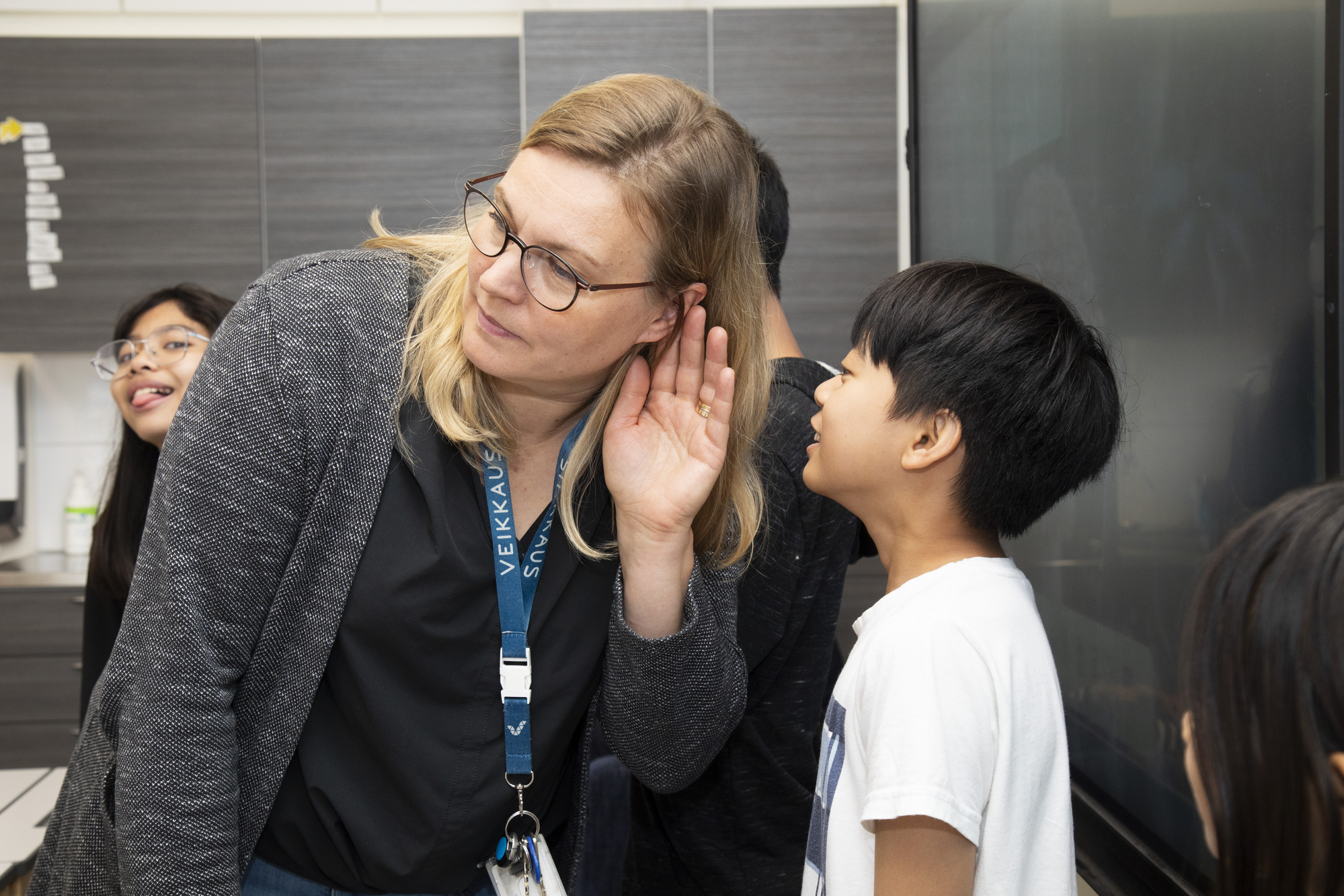
Hanna-Leena Johansson, who qualified as a class teacher in 2005, became enthusiastic about teaching preparatory classes while she was still a student, when she heard a visiting teacher talk about their work.
– I enjoy the international aspect and the fact that there are always new things to think about. In this job, I get to learn new things about life and also about learning, Johansson says.
Preparatory education lasts only one year. After that, students move on to general education in their own grade or a grade below. Johansson's class currently has 12 students, the youngest of whom is in first grade and the oldest in seventh grade.
Right now, there are many students in the class whose parents have come to Finland from the Philippines or Vietnam for work. According to Johansson, these children often have good study skills and value going to school. Working in the classroom is different than when the majority of students have come to Finland as refugees or asylum seekers.
– Every student is always an individual, but many children from crisis areas are traumatized, and that inevitably affects their ability to learn. Teaching is also different in such cases, Johansson explains.
Plain language available
Johansson has worked as a preparatory class teacher at Juhannuskylä School for almost his entire career, since 2011. He began working as a teacher in Tampere in 2009 and was appointed to his current position in 2013.
According to Johansson, one of the positive changes in the school world is the improved availability of preparatory teaching materials. When there are more students, there is more supply, and you no longer have to search for and prepare all the teaching materials yourself.
Johansson's students already use some of the same digital environmental studies materials as students in mainstream education. Thanks to the plain language version. In addition to her work as a teacher, Johansson is a low-threshold consulting teacher for the City of Tampere and writes plain language learning materials.
Johansson took a course in plain language earlier this year for her work with learning materials. She recommends the course to all teachers. It opens participants' eyes to the kind of language they themselves are accustomed to using.

– I always try to see the world through the eyes of my students and their families. What is it like here from their perspective? It helps me understand how difficult it can be to function in a foreign language environment. I have always used plain language intuitively with my students, but the training gave me a lot of good practical tips and new ideas.
Although Johansson has always strived for clear communication with parents and considered, for example, how messages are translated when they are put into a translator, she also gained some useful practical tips for this task from the plain language training.
“Good relationships smooth out many bumps in the road”
For Johansson, the variety of the work has always been one of the good things about being a preparatory class teacher.
– There are rarely days when I look forward to the end of the workday. The work is interesting, and there are no dull moments. After a long time, we now have a child from a crisis area coming to our class. It is clear, that many things will change and that the change will have a major impact on the whole group. Coping with such major changes clearly becomes a little more difficult with age.

In a job that is prone to change and busy, Johansson is helped to cope by the fact that the students and their families are nice. The children are eager to learn, and the parents respect the school's work and value the teachers.
– I have to be trustworthy, and I want the parents to feel that they can easily get in touch with me. An older colleague once said that good relationships smooth out many bumps in the road ahead. Language plays a big role in building trust.
When asked what he would most like to see in his own and his students' school life, Johansson's answer is clear.
– I would like us all to have more time. Every minute is always filled with something to do.
However, Johansson does have time to meet his students. At the end of a busy school day, he wishes each of them a pleasant start to their vacation. Perhaps some of these students will come back years later to say hello to their former teacher and tell him about their studies in civil engineering or nursing. These moments are important to Johansson.

Hanna-Leena Johansson
- Classroom teacher at Juhannuskylä School
- Low-threshold consulting teacher
- Author of plain language learning materials
- Favorite place in Tampere: The shores of Lake Näsijärvi
- Free time: Has been playing soccer and futsal for eight years in the women's amateur team Loiske Ladies.


