
Driverless robot bus: a new era begins in Tampere
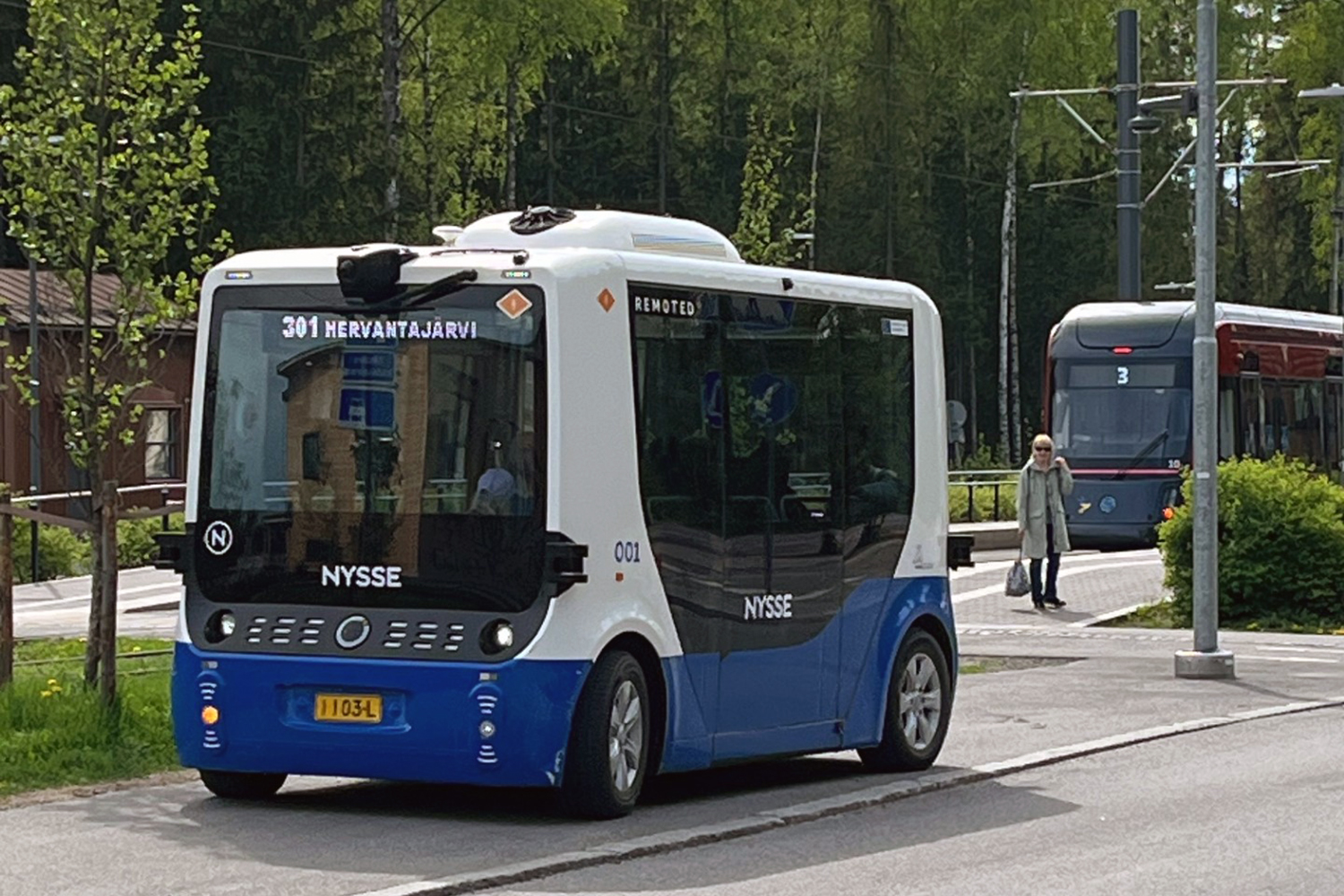
Fully autonomous robot buses have been tested elsewhere in the world, but mainly in restricted environments or pilot projects. In Tampere, the robot bus operates as part of regular public transport, providing a connecting service to tram line 3.
Robot buses have been tested in real traffic environments in Tampere. The robot bus has been operating on line 301 since November with a safety driver on board. The transition to fully autonomous operation is based on experience and test results, which show that the service can be operated safely even without a driver on the bus.
Safety comes first
The safety of robot bus services is based on several complementary systems. The buses operate along a predetermined route at low speed and continuously observe their surroundings using various sensors.
If the system detects an obstacle or an abnormal situation, the bus stops automatically and, if necessary, very quickly. Other road users should keep a safe distance from the robot bus.
Although there is no driver on board, the service is continuously monitored remotely. Professionals follow the buses in real time and can intervene if needed. The bus includes instructions for passengers, and assistance is easily available via the emergency call system in the passenger compartment. There is also a continuous audio and video connection from the bus to the remote monitoring centre.
How to travel on the robot bus
For passengers, the most visible difference compared to a regular bus journey is that wearing a seatbelt is mandatory. Passengers must remain seated during the journey. Otherwise, travelling is familiar: tickets must be validated at the ticket machine next to the door on every journey.
The bus can carry up to 12 passengers, and there is also space in the passenger compartment for prams.
The robot bus operates under route number 301. Timetables are available in the Nysse journey planner and schedule service. The transfer connection to tram line 3 is at the Hervantajärvi stop.


