Tampere schools invest in future digital skills

The Digital skills pathway models aim to increase the digital skills of both pupils and staff for future tasks.
Aleksi Huttu guides two students at the table on how to use Digital Models.
Aleksi Huttu, a teacher at Lielahti school, is one of the authors of the Digital skills pathway. Students Eelis Koponen (left) and Tomas Sewell are checking a digital skill model for 6th graders.

The Digital skill pathway is a tool to support the teaching and learning of digital skills. It is freely available online and consists of separate digital models for grades 1-9.

The digital skill models contain activities suitable for each grade, aimed at improving digital literacy, programming skills and media skills. The tasks in the digital models are linked to the objectives and assessment criteria of the different subjects. The introduction of the Digital skill pathway has been eagerly awaited.

– The digital models allow pupils to progress through the tasks, monitor their learning and see their own progress in concrete terms. This is the idea in Digital skill pathway, says Aleksi Huttu, class teacher and tutor at Lielahti school.

Aiming to practice the skills of the future

The digital models were born out of the need to respond to pupils' varying skill levels in using devices and digital tools. In particular, there was pedagogical concern from the second level of education about the digital skills with which pupils would move on from primary school.

Tomas Sewell, a pupil, plays the Digimalli game for 6th graders on his computer.
The Digital skill pathway is freely available online, with nine digital models for each school grade. Tomas Sewell explores the structure and learning objectives of the following digital model.

The pathway progresses from getting to know digital skills to deepening them and finally to applying them. Initially, the tasks are carried out under the guidance of the teacher, but as the student progresses from one digital model to the next, experimentation and independent work also increases. In addition, in both grades 6 and 9, pupils carry out a self-assessment of their own skills.

– The aim is for each pupil to achieve at least a basic level of competence in the main digital skills.

The Digital skills pathway has been developed in extensive cooperation with other teachers in Tampere, and the objectives of the digital models are based on the objectives set in the curriculum. The digital models are designed to support teachers and make digital skills learning a natural part of the school's everyday activities. It is a good idea to set aside time for joint planning, so that teachers have the opportunity to familiarise themselves with the digital models, for example with the school's Digitutor teachers.

– The Digital skills pathway is intended for both pupils and staff. Appropriate use and practice will increase future digital literacy skills, says Huttu.

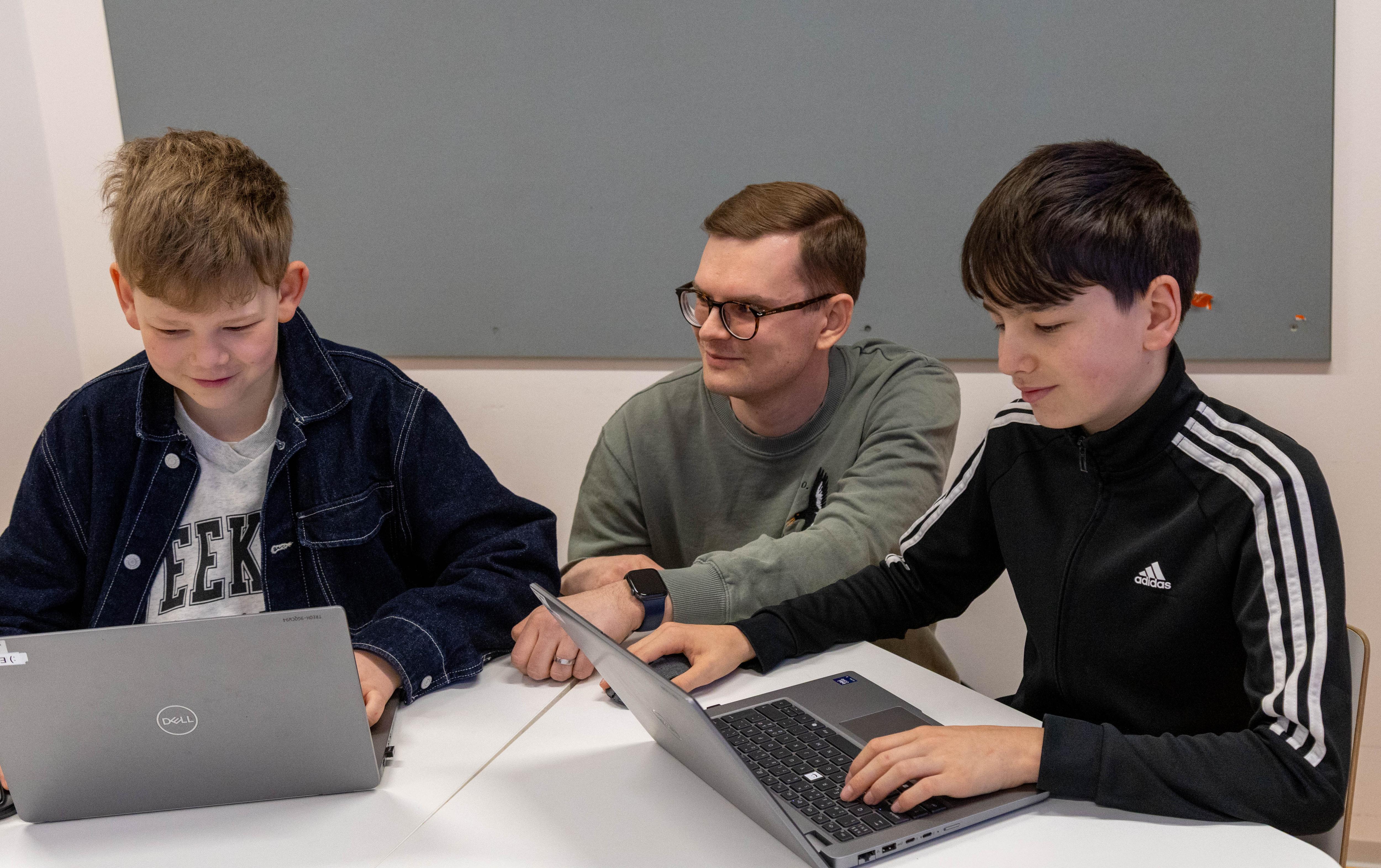
Aleksi Huttu guides two students at the table.
The digital models are based directly on the objectives set by the curriculum. Teacher Huttu also uses the larger digital screen in the background in his teaching.

Further information

Aleksi Huttu
Teacher
Phone:
040 562 1716
Text: Aleksis Villanen
Photos: Aleksis Villanen
Share in social media