
Aid work is a team effort
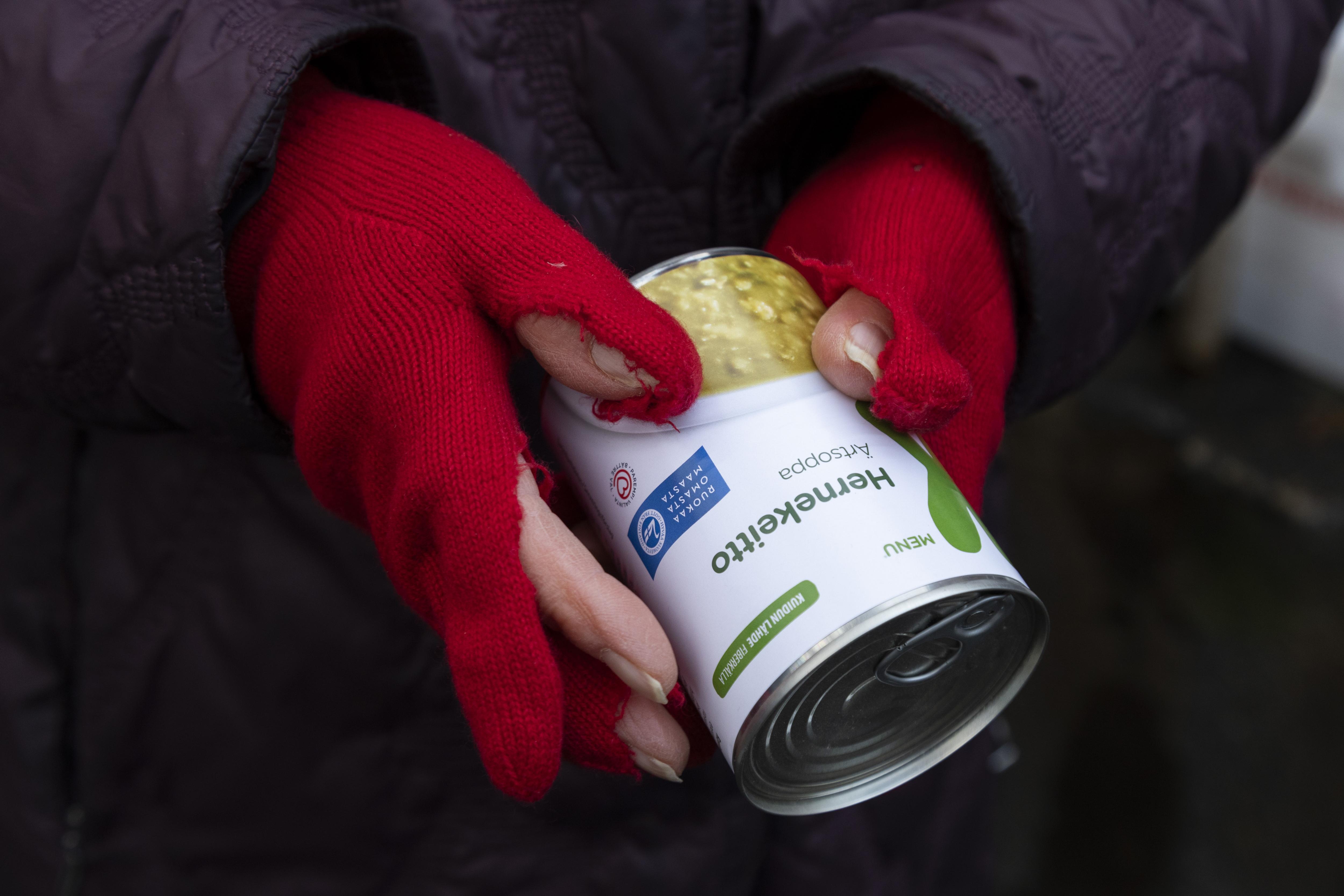
Statistics Finland recently reported that 782,300 Finns belonged to low-income households in 2024.
Low-income households accounted for 14.2 percent of the total, up from 13.4 percent a year earlier. The income of the lowest-income decile rose by about one-fifth between 1995 and 2024, while the income of the highest-income decile rose by as much as 85 percent.
The growth in income inequality is also visible in Tampere. On average, Tampere residents are better off than ever, but the gap between the haves and have-nots is widening. The unemployment rate here is one of the highest among Finland's major cities.
Mika Vuori, program manager for the City of Tampere's Welfare Development Programme, notes that the phenomenon extends beyond income: in addition to livelihood, there are also significant differences in other areas of welfare, such as health and social well-being.
– For example, child poverty has increased, says Vuori.
The increased need for financial assistance has also been noticed by the Food Bank of the Evangelical Lutheran parishes in Tampere.
– In addition to low‑income families with children, we have many people with an immigrant background who struggle to find their place in society – or whose place ends up being in the food bank queue. At the beginning of this year, many benefits will be tightened, which is cause for concern. I feel particularly sad for the children: they have no control over their situation, says Marja Palkonen.
Palkonen has led the Food Bank for six years and is about to retire.
The city works behind the scenes
The Finnish Institute for Health and Welfare (THL) grants municipalities state subsidies for the provision of food aid. These subsidies are used, among other things, to cover the costs of distributing donated food or organising other food aid activities.
– When a non-profit organization organises food distribution, few people think about the fact that the city does a lot of invisible work behind the scenes. Instead, people often ask why the city does nothing to help the poor, says Esko-Pekka Järvinen from the Community and Development Services of the City of Tampere.
The city is an enabler that supports associations responsible for practical work in matters such as reporting and the payment of grants. The city has experience with the special features of state aid, which can be useful for smaller operators involved in the work.

The city provides significant support to the Food Bank of the Parishes: €335,000 annually. Part of this amount goes toward logistics costs and part toward food purchases. In 2025, the city council allocated an additional €50,000 in funding for the operation.
Marja Palkonen from the Food Bank praises the smooth cooperation.
– Other cities could learn from this. The cooperation has been constructive, and problems have always been discussed together.
Palkonen says that, for example, the proposal made by the city's poverty working group in 2018 for a centralized logistics center for the food bank was ahead of its time. The city provided financial support for the development of the center and for employing people there.
Previously, food aid operators collected surplus food from stores separately. Food safety was not always fully ensured, as there was no refrigerated transport. Thanks to the logistics center, operations have become clearer and of higher quality.
Responsibility is shared
In the summer, the city of Tampere organises free park meals in seven areas. The activity, coordinated by youth services, is intended for children under the age of 18.
It is primarily a community event where children can spend time outdoors and get food. For some families, it can also be a big financial help.
Last summer, the park meals were organized by TampereMissio, the Tampere branch of the Finnish Red Cross, and the Mansikkapaikka community center. During the summer, nearly 18,000 free meals were served. The number of visitors has grown.
In 2025, the city trialed a similar initiative in Hervanta for people aged 65 and over. The community meals for pensioners combined food, socializing, and cultural experiences. Free lunches made from surplus food were served once a week for around nine months.
– We have received requests from other areas as well. For example, a similar initiative has been proposed for young adults, says Mika Vuori.
The Hervanta trial was also the result of collaboration between several parties. The food consisted of surplus meals left over that same day at the Tredu vocational institute, donated by Pirkanmaan Voimia (the catering provider). Students transported the food, and YSTI ry – a community‑based social services organisation in Hervanta – served it on its own premises.
– We always try to find the best possible combinations so that no single party is left with too heavy a burden. It is a great advantage for the city that we have partners who operate close to everyday situations. We couldn't do this work on our own, says Vuori.
Active Pass helps in everyday life
The municipality is required by law to promote the well-being of its residents. Therefore, the income and well-being differences of service users are taken into account in the organisation of some municipal services.
The aim is to provide equal services in basic operations. A good example is the City of Tampere's Lupa liikkua, lupa harrastaa (Permission to move, permission to exercise) initiative, which offers free hobby groups for pupils in basic education. The Lupa harrastaa groups are intended for all pupils in grades 1–9, and the Lupa liikkua exercise groups are for pupils in grades 7–9.
– The activities are equal, meaning that anyone can sign up for the groups. In practice, however, the activities give disadvantaged people a better opportunity to access services, says Mika Vuori.
– In order to reduce welfare gaps, vulnerable people need more help than others, adds Esko-Pekka Järvinen.

The city also has measures specifically targeted at low-income earners to support their well-being. Järvinen and Vuori highlight the Active Pass, which has a long tradition.
The Active Pass is loaded onto a Nysse travel card and can be used to pay for travel on public transport in the city. In addition, the Active Pass provides free admission to many museums.
– You cannot apply for the Active Pass yourself, and it is not linked to income support. Employees of the city, the welfare sector, and organisations involved in the collaboration offer it to Tampere residents who are covered by their services, says Järvinen.
The Active Pass has been praised by young people, for example, who have been given a place in a free hobby group but for whom traveling to their hobby activities has proved too expensive. With the Active Pass loaded onto their travel card, young people can travel to their hobby activities.
Another service aimed at people in difficult financial circumstances is the Kaikukortti card. With this card, city residents aged 16 and over can obtain free tickets to museums, theaters, festivals, concerts, and other events.
Cooperation moves things forward
Everyday help usually has an immediate impact. That is why we also need activities that improve well-being in the long term.
For example, the joint Youth SIB impact investment project between the city and the welfare sector is expected to have a major impact. It supports the secondary education and integration into working life of young people leaving foster care.
In January, the City Council will discuss the city's welfare plan for 2026–2029. One of the plan's cross-cutting themes is livelihood, which is examined from the perspective of reducing welfare disparities. This is linked, for example, to affordable housing.
– Cooperation with the third sector and partnerships that support housing advice and prevent homelessness promote livelihoods. Influencing major policies such as housing and land policy is a slow process, but the city has a strong will to move things forward, says Järvinen.
State subsidy as support
- In 2025–2026, Tampere received a state subsidy of just over half a million euros for the implementation of food aid.
- Tampere is the project manager in Pirkanmaa, distributing the subsidy funds to non-profit organizations that distribute food and provide meals or snacks, for example.
- There are 11 non-profit organisations in the Pirkanmaa region that provide food aid under the scope of government grants.
- Within the Food Bank’s area of operation, there are around 80 entities that deliver food aid.


