
Natural stormwater areas help to control street flooding
Stormwater management has started to become a more prominent point of attention in recent years. Climate change is causing more rainfall that is more intensive.
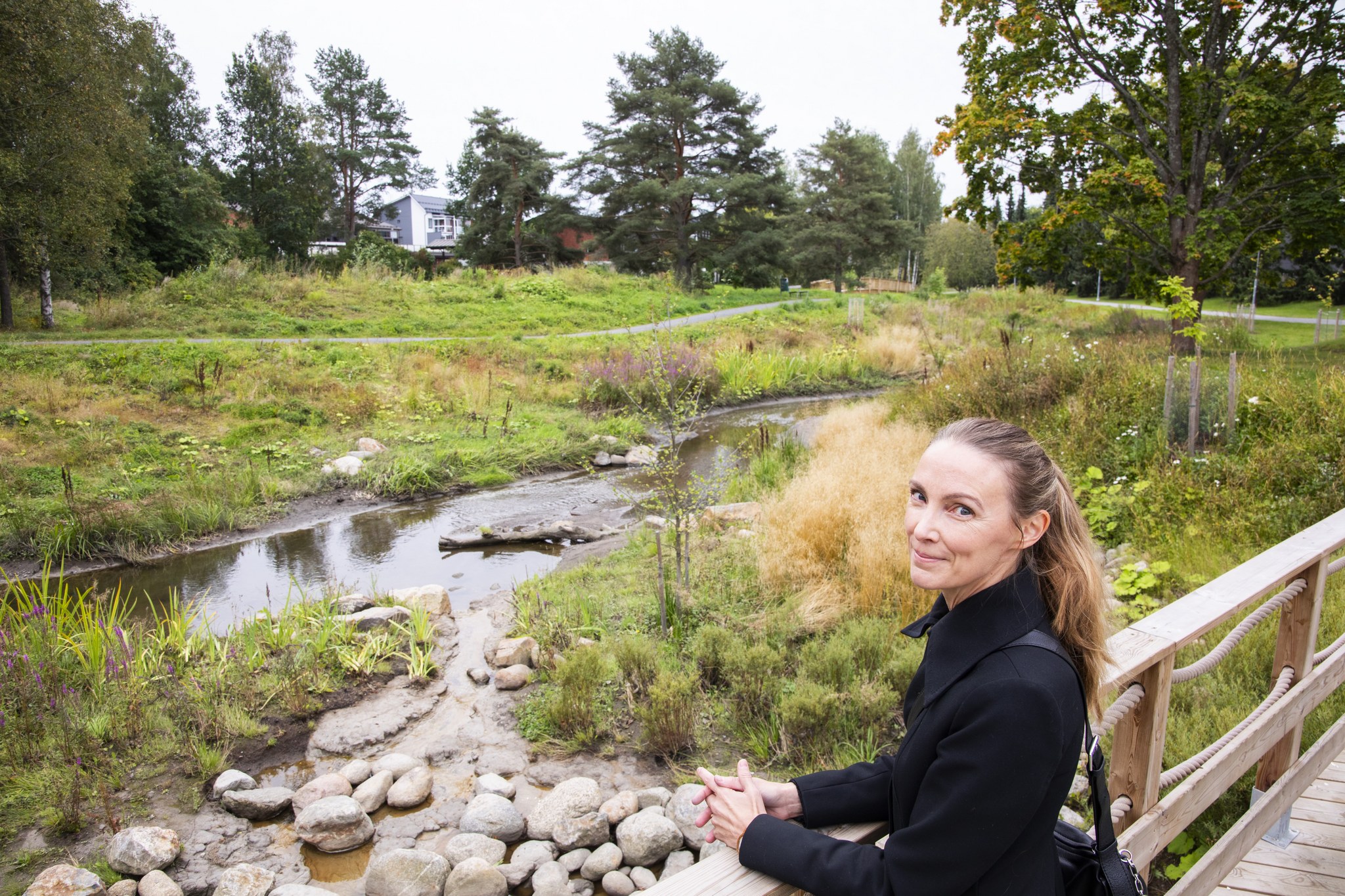
Today, cities try to stop flooding in streets and residential areas in many ways, including natural stormwater solutions. These are absorptive, filtering and purifying systems that emulate natural processes. In Tampere, you can find them at the Vuohenoja brook in Nallenpuisto and Sandelininpuisto parks near the edges of Kaleva and Hakametsä, between the Hervanta highway and Aarikkalankatu, among other places.
The city has built flood areas for delaying stormwater and restored the riverbanks in both. What delaying means is balancing the water flows during heavy rainfall and when the snows melt. The structure lifts water to the flood area in a controlled manner, from where it flows onward gradually instead of flooding the streets.
Salla Leppänen, stormwater expert at the City of Tampere, says that this work is a kind of restoration. In the 1950s, Finland began to straighten main channels and put them in pipes. This eliminated the natural flood areas on riverbanks, which is also what happened at Vuohenoja.
– An open channel is always preferable to a pipe, as there is more room for the water to rise. It is also a better route for the biota that way.

Vuohenoja is a brook that flows through the Takahuhti, Uudenkylä and Hakametsä areas. There is a large catchment area above the brook that extends to Kangasala, from which stormwater flows through Vuohenoja to Iidesjärvi and onward to Pyhäjärvi.
Transformation at Nallenpuisto park
After the restoration, the brook now curves through Sandelininpuisto and has deeps and other irregular spots in the bottom that change the flow of the water. There are now spawning grounds for fish.
The flood zones around the brook have flowering natural plants: yellow irises, common rushes and other flowers that would thrive in a wet meadow. The bulrush has spread there on its own.
– Us stormwater people, we like bulrush, since it binds nitrogen from the water. Landscape people don't, as it spreads so quickly, smiles Leppänen.
Nallenpuisto park in Kissanmaa has also been transformed. The brook, which flows next to Ritakatu, used to be as straight as an arrow and would often flood the nearby intersection. Now, the previous sand field and surroundings of the brook have been turned into a flood meadow, which has brought the flooding under control.
Boost in biodiversity
There are real-time monitoring systems for water quality and volume. Stormwater quality and volume measuring stations have been installed in the main channels of Tampere. The city also has one rainfall measuring station, with two more on the way next summer.
– They will provide data to support decision-making and planning, says Leppänen.
The brook restoration works have been carefully planned to benefit more than just stormwater management. The environments must also work for the animals. The flora and fauna of Nallenpuisto and Sandelininpuisto have become more diverse, and erosion of the brook has decreased.
– These are such beautiful places, too. Studies show that time spent in urban nature improve your mental well-being. I even saw someone meditating on a park bench in Nallenpuisto once, says Leppänen.

Stormwater
- Stormwater is leftover water from rainfall and drainage that does not evaporate or absorb into the soil, flooding instead into streets and yards.
- Stormwater solutions are built to prevent flooding in unwanted places.
- It is possible to reduce stormwater build-up at the source. If yard areas and car parks are left unpaved, rainwater can be absorbed into the ground and does not need to be conveyed away. Plant cover, including green roofs, boosts evaporation. Brooks, ponds and stormwater wetlands slow down the water on its journey towards a river or lake.
Source: vesi.fi (in Finnish)


