
Humane digital transformation
Digital solutions, human stories – Perspectives from those of us building the future.

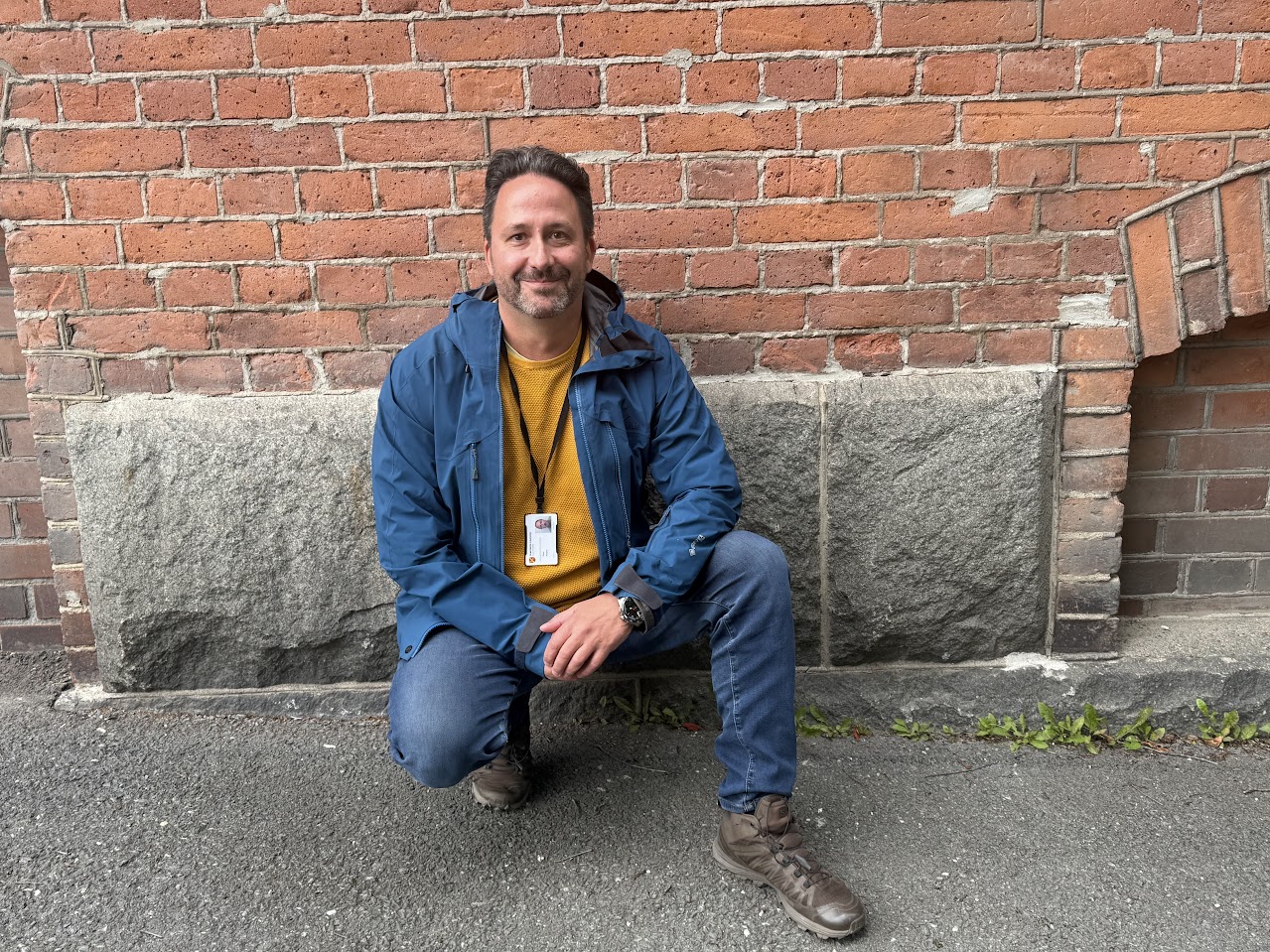
Klaus Nylamo, a promoter of generative AI from the City of Tampere in a short interview
Will AI replace experts in municipalities?
– When generative artificial intelligence (AI) came to the forefront a few years ago, it was met with what, in hindsight, proved to be exaggerated hopes and fears. This is often the case with new technologies. But AI was not then, and still is not, ready to take over all human tasks, not even most of them.
– However this is not a flop: AI solutions are already an important support in the working day of many workers in the Tampere region.
How have the City of Tampere and its surrounding municipalities adopted AI?
– The municipalities in the Tampere region have openly begun exploring the possibilities of AI. We’ve provided systematic training for staff, enabling them to identify the most suitable ways to apply AI in their respective roles.
– There are around 2800 users of the secure Copilot chat in the region and around 900 employees in the municipalities of the region use the more sophisticated M365 Copilot. In addition, more than 150 employees participated in a learning circle in the spring of 2025 to practice building their own AI assistens. Several dozens of potential use cases were identified. For us, as for other public sector actors, the AI assistant is particularly useful when seeking guidance or answers to questions and there is a lot of material to wade through.
Where has AI been at its best, and when has it not been useful?
– Somewhat surprisingly, at least in complete contrast to humans, AI is at its strongest when it is discussing any topic on which quite a lot has been written somewhere in the world. If we ask it to discuss a limited set of data, our internal guidelines or the use of a service, then the stumbling starts to occur more often. AI needs support to understand how to read the available data and how to fill in the gaps in the data.
How has AI changed your own work?
- It is often said that AI is not being used to its full potential and that it is much more than a search engine. That's true, but in my case at least, it's search engines that have been the first to be replaced by AI. The change is that instead of going through several deliverables, I get a direct result: for example, a summary of how the discussion on the training planned for the autumn has progressed in the different channels during my holiday, or a draft of a project presentation based on the needs and content requirements I have reported.
In which direction do you see the use of AI developing next?
- Tailored assistants that come with office applications or are built by clipping from the user interface for different purposes already work reasonably well and are developing at a fast pace. The implementer, let alone the administrator, of an AI assistant for a specific task needs to know less about technology than was thought a moment ago. The important thing is to find someone who knows what they are doing and can provide the AI with the materials and instructions it needs.
- In the same way that website maintenance has moved from coding to content production, AI is well on the way to us biological intelligences doing the talking and AI doing the technical.
And how will services for local citizens change?
- It will be interesting to see how the role of the citizen and the customer will change and what personal AI assistants will soon be able to do for us. Will I soon no longer have to log in to any interface to buy shoes, or will my assistant do it for me, as long as I somehow express my needs and will? Or will I no longer have to fill in applications at all if the City of Tampere and other public service providers can and will anticipate my personal needs?
- What is certain is that in five or ten years at the latest, AI will be part of our everyday lives in ways we cannot see now.


Leave a comment