
Tredu's logistics studies and Tampere Classical Upper Secondary School teach future working life skills
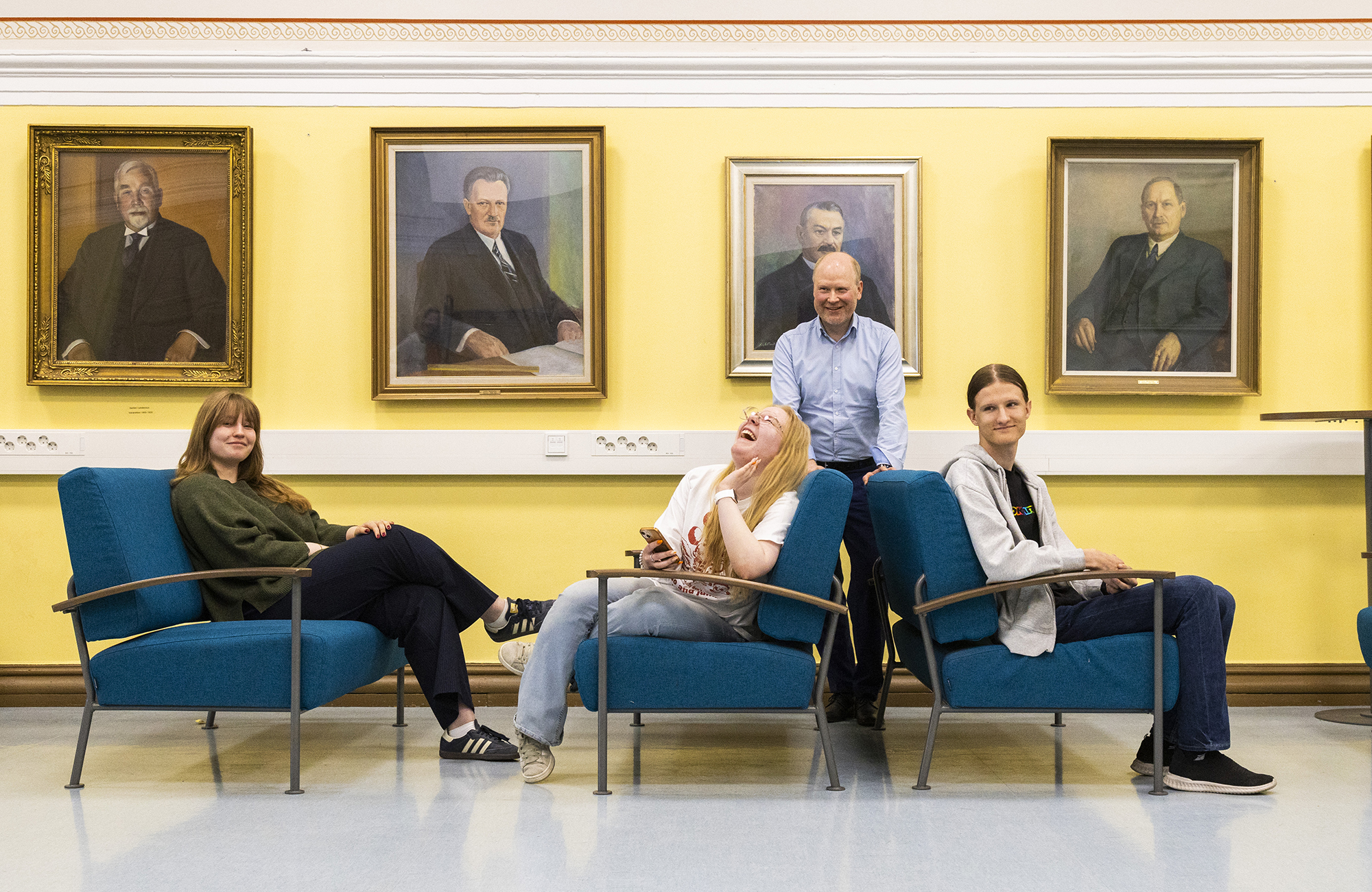
Students are looked after at the City of Tampere upper secondary schools and the Tampere Vocational College Tredu campuses. Secondary education supports students' mental well-being and understands that there is more to life than school.
The City of Tampere's recent Pathways in Education, Teaching and Training 2025-2035 programme (Kasvatuksen, opetuksen ja koulutuksen polut 2025–2035 -ohjelma) aims to make Tampere stand out as a leading education city in Finland, where every learner is treated as an individual and a member of the community. The priorities of the programme emphasise a safe and caring learning environment, mental health support measures and bullying prevention.
The programme calls for vocational education and training to encourage initiative, courage and responsibility, and to teach teamwork. The aim is that young people will learn to bring their own ideas for development and new ideas boldly to the world of work.
– We educate our students to tolerate change. In the future, there is unlikely to be a single job for decades, and learning new things doesn't stop at graduation. Interpersonal skills will also play an increasingly important role in working life, says Juha Mäkelä, a logistics teacher at Tredu.
A positive cultural change in progress
According to the new programme, one of the objectives of upper secondary education is to strengthen working life skills. Education will pay particular attention to continuous learning and changing environments. The programme's emphasis on individualised support for each student's pathway has already triggered a positive cultural change in upper secondary school communities.
– Pedagogy is being systematically developed in Tampere's upper secondary schools to meet future needs. We teach young people to make choices and focus on things that interest them. We encourage them to reflect on their own values and plans for the future. We teachers also discuss how we take into account different learners and support them in making choices, says Tomi Anttila, lecturer in physics and mathematics and development teacher at Tampere Classical Upper Secondary School (Clasu).
From pressure and stress to the joy of learning
At Clasu, almost everyone has a vision for their future. One will become a doctor, another a lawyer. It's a good idea to think about alternatives to the dream, so that the pressure doesn't become too great.

– The hard pressures have been tackled. The change for the better is particularly visible in the way grades for individual courses are treated. We teach young people to prioritise, because that is also needed in the world of work. Although teachers will always love their subject, many teachers now set targets for their courses to achieve the desired grade, rather than expecting everyone to aim for the best grades, tells Anttila.
– Fortunately, this is the case. There's so much more to the world than numbers, says Venla Vuorinen, Clasu's student body board president, development student and spring A-level graduate.
– If only the media would understand that the only thing they would report about the exams is not how someone got so many outstanding grades.
Identifying your own strengths is important
The vast majority of Clasu's students are talented young people for whom prioritising is not always easy. Sasu Länsiö and Miia Kaldenbach, second-year upper secondary school development students, recognise the phenomenon. In their own words, they still have a slightly skewed attitude towards grades: you should get the best result in everything.
– Of course, the most important thing is not the grade, but the fact that you learn, says Kaldenbach, for whom general education is a value in itself.
– It's nice to know and understand what's going on around you. For the world of work, we learn critical literacy, time management and meeting skills.
– It's good that in high school we open up a lot about what we learn that is needed in the world of work. It was also great when in the philosophy course the essay was not just an assessment, but was discussed and the aim was to learn, says Länsiö.
In addition to preparing students for the world of work and identifying their own strengths, the upper secondary school also teaches them to find their inner motivation and encourages them to reflect on their own values.
– There are many other important things in life, especially relationships. It's also nice to come to school for the friends and the good food. I guess you get wiser too. At least you get more out of life when you've learned things, tells Länsiö.
According to Tomi Anttila, a development teacher, the system of the big secondary schools in Tampere is built to support community spirit. Students get to know each other and often the same teacher teaches them in several courses. If something bigger happens in a young person's life, the schools have a wide support network. Positive developments in the everyday well-being of students, in meeting them as individuals and in taking into account the whole of their lives are constantly taking place in Tampere, according to Anttila.
School is a nice part of life, not a compulsory evil
Sanni Nieminen, who is studying to become a combined transport driver, has not had a single career dream for her future since she was a little girl. When she was in ninth grade and explored the different options, Tredu's basic logistics degree began to feel like her own.
– I enjoy being able to do things on my own and in my own way, and not having to wait for others. As a combined transport driver, I can work independently, but I also get to meet other people at the same time.

Nieminen wanted to study at the Hepolamminkatu campus in Hervanta, even though it was a long way from her home in Hämeenkyrö. Nieminen, who is in his second year of studies, is happy with his choice. He says that Tredu takes good care of its students, the studies are varied and there is a lot of talk about working life.
It's easier to cope with the pressure when school is kept at school and you can concentrate on your free time at home. Students are listened to and teachers are easy to contact if you need help or support with something.
– It's always nice to come to school and it's fun to learn. School is a nice part of my life, not something I have to do. When I got my driving licence, it also made travelling to school easier.
For the future and for working life
According to teacher Juha Mäkelä, studies at Tredu are flexible according to need, and support is readily available if there are concerns about the young person. Young people are prepared for working life, especially by emphasising the well-being at work required in heavy industries.
Working life has always had a strong presence in vocational education and training, but Mäkelä says its role has grown even more. At best, students are employed in the spring of their third year directly by the company where they are completing their final work placement. However, they are unlikely to be jobs for the rest of their lives, as Nieminen acknowledges.
– Right now, I like this. I dream of driving long distances and seeing lots of new places. Maybe I'll do something else later in life, you never know, concludes Nieminen.
Pathways in Education, Teaching and Training 2025-2035 programme
The City of Tampere's new Pathways in Education, Teaching and Training 2025-2035 programme (Kasvatuksen, opetuksen ja koulutuksen polut 2025–2035 -ohjelma) aims to make Tampere stand out as a leading education city in Finland, where every learner is treated as an individual and a member of the community. Tampere wants every child and young person to have the opportunity to grow and develop as a person, to reach their potential and to participate in the community.
The priorities of the programme emphasise a safe and caring learning environment, mental health support and bullying prevention. Literacy and multilingualism are developed throughout the educational pathway, and the Finnish language learning of foreign-language children is supported from early childhood education and care to higher education. Digitalisation and artificial intelligence will be used to support individualised guidance, while at the same time maintaining non-urgent encounters and strengthening the learner's basic skills.


