Tampere makes the economic value of nature visible – ecosystem accounting supports sustainable urban development
Urban nature provides significant, measurable economic benefits. As a pioneer in this field, Tampere has developed and piloted ecosystem accounting, which allows the city’s natural capital and the benefits it generates to be assessed and taken into account in decision-making to a greater extent than before. For example, nature provides city residents with recreational benefits worth 149 million euros annually.
Ecosystem accounting makes it possible to show the value of benefits provided by nature, such as recreation, flood protection, and urban cooling. These values can be presented in a comparable manner alongside other economic indicators.
Tampere has been actively involved in the development of ecosystem accounting in collaboration with the Finnish Environment Institute (Syke). The latest Countecos project, funded by Syke, the pilot cities, and Sitra, assessed the economic value of recreation and cooling services. In the earlier ENVECOPACK project, funded by Eurostat, the economic value of flood mitigation services was assessed.
The findings highlight the importance of urban nature, particularly for residents’ well-being and for adapting to climate change.
The map layers of the ecosystem accounts illustrate how nature provides benefits to people. The base map at the bottom shows the geography of Tampere. The land cover map overlaid on top indicates the types of natural features found in different areas and their extent, such as various types of forests.
The top map layers show the practical benefits nature provides to city residents, such as recreation, cooling during heat waves, and protection from floodwaters.
Pilot result: value of recreation €149 million
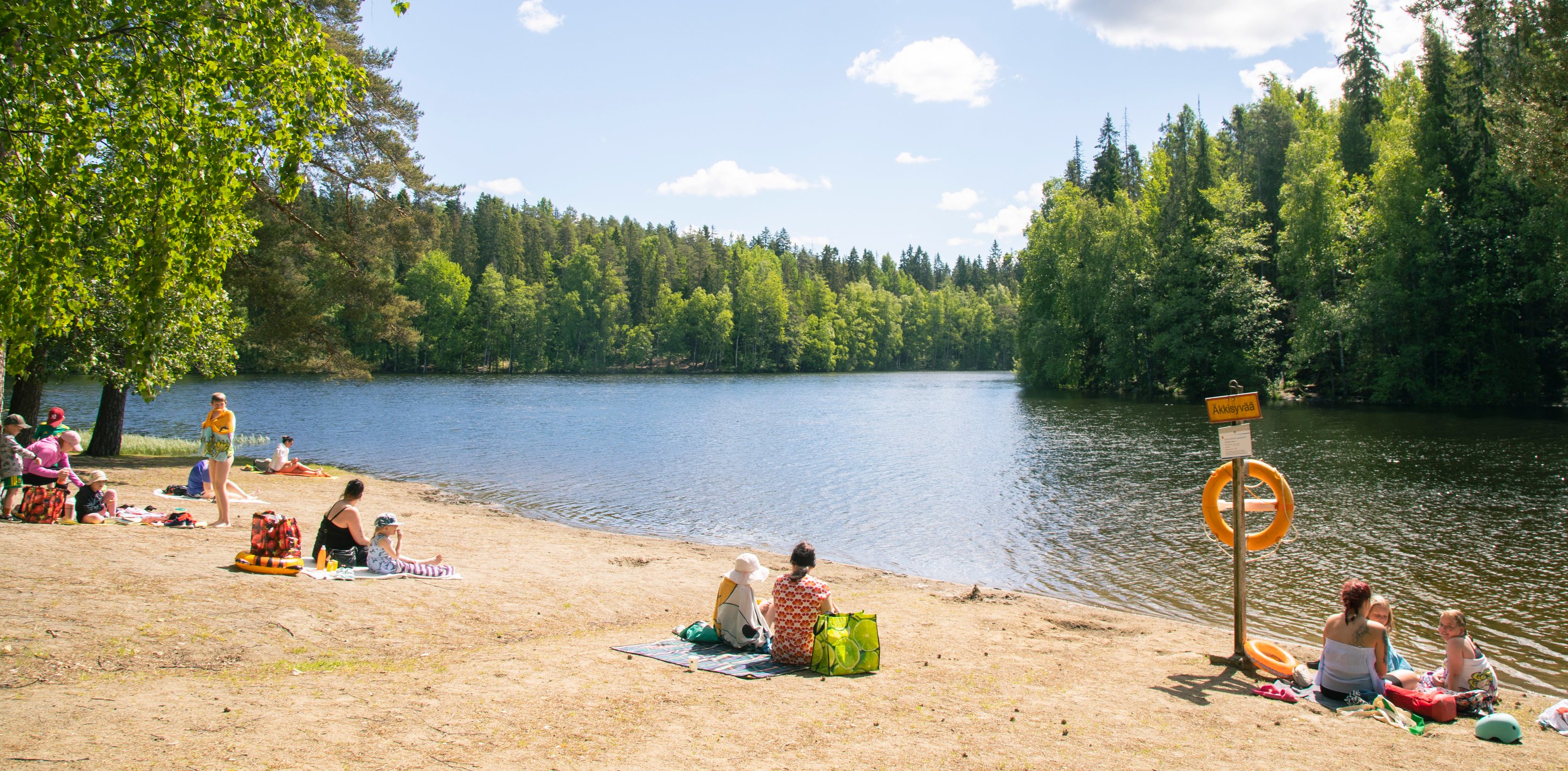
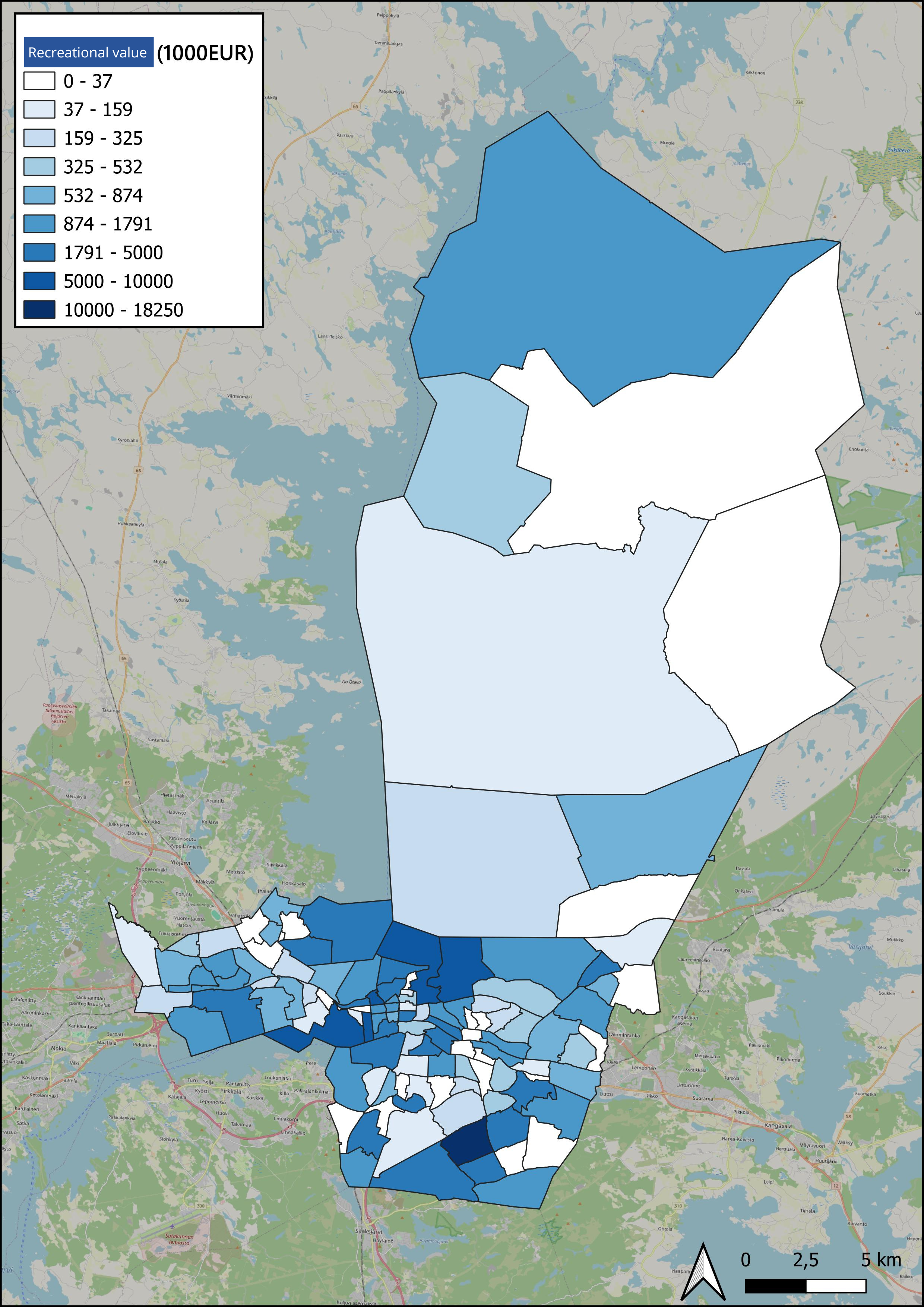
In 2024, the economic value of the annual recreational benefits provided by Tampere’s green and water areas was estimated at 149 million euros. In particular, water bodies, old forests, and the natural areas in the city center, Kauppi-Niihama, and Hervanta generate significant recreational value.
The economic value of recreational services was calculated using a survey of residents. The survey utilized geographic information to determine how people use recreational services. The statistically representative survey revealed how much and where the recreational services offered by the city’s green and water areas are used, and how much time and money was spent to reach the destination.
Pilot results: cooling benefits amount to 13 lives saved and 57 million euros
Green spaces and water bodies cool the city during heat waves and reduce heat-related health risks. In 2022, the cooling service is estimated to have saved approximately 13 lives, with an economic value of about 57 million euros over the course of the summer. Thanks to the cooling effect, lives were saved particularly among older age groups.
The cooling effect of vegetation and water bodies was calculated using a model that estimates the ability of different ecosystem types to cool the air based on shading, evaporation, and reflectivity. The economic value of the cooling effect was calculated by combining the cooling effect with the risk of excess mortality associated with average temperature. This was used to calculate the number of lives saved due to the cooling effect, which was converted into a monetary value using the statistical value of a human life.
Pilot results: flood mitigation valued at €45 million per flood event
Green areas and soil retain stormwater and help prevent flood damage. In Tampere, the economic value of flood mitigation services in 2018 was estimated at 45 million euros per flood event with a 24-millimeter rainfall peak. The greatest economic benefit from flood mitigation was observed in residential areas dominated by single-family homes.
In the calculation, the economic value of flood mitigation was based on the potential damage costs to buildings; for this reason, the economic value of the flood mitigation service provided by forests, for example, did not rise to a high level, even though they retain a significant amount of rainwater.
Caring for nature is an investment
The message from the Tampere pilots is clear: caring for nature is not just a cost, but a long-term investment that delivers significant economic, social and environmental benefits. Biodiversity increases City of Tampere's resilience, supports the health and safety of its residents and strengthens the vitality of a growing city.
Ecosystem accounting provides Tampere with a concrete tool to take into account its natural capital more systematically in strategic planning and decision-making - in a timely and informed manner.
Ecosystems and the services they provide
An ecosystem is a functional entity consisting of interacting organisms and their inanimate environment living in a relatively homogeneous area of natural conditions.
Ecosystem services are a range of tangible and intangible benefits that people derive from nature, such as climate regulation, soil and groundwater formation, pollination, nutrition, stormwater management, pharmaceuticals, and the recreational opportunities and aesthetic experiences provided by nature.