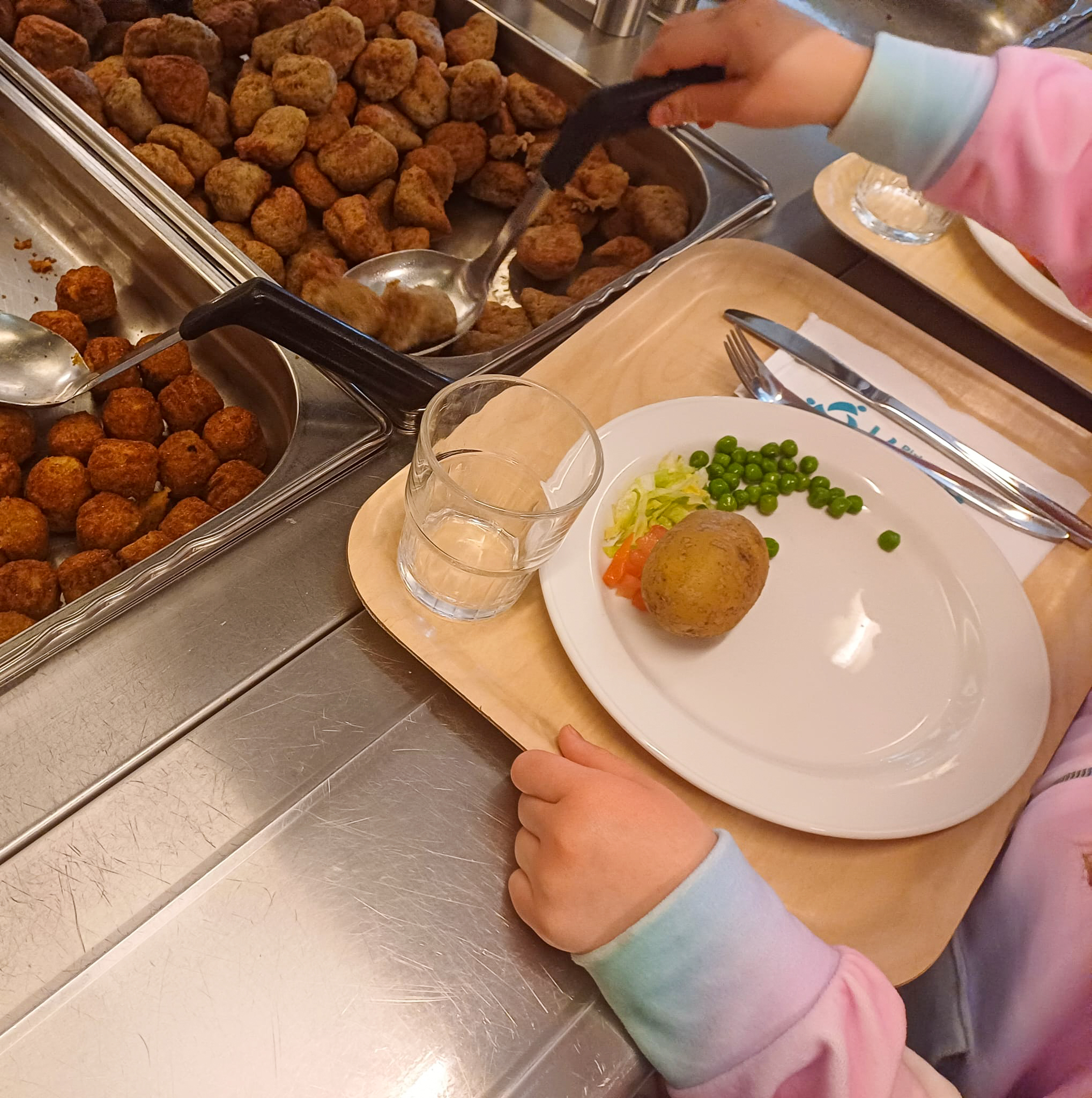
The City of Tampere and Pirkanmaan Voimia, which is responsible for food services, have succeeded in significantly reducing the number of unnecessary meal orders and food waste in early childhood education units.
During a five-month monitoring period from August to December 2025, the city saved the equivalent of 48,500 unnecessarily ordered lunches compared to the situation a year ago. In monetary terms, this amounts to total savings of over 171,000 euros.
An unnecessarily ordered meal means that a meal has been reserved and prepared for a child who does not attend early childhood education that day. Sometimes this is due to sudden illness, but often it results from changes in the child’s care schedule that previously did not reach Voimia in time.
A turning point came in spring 2025, when the City of Tampere and Pirkanmaan Voimia created an integration enabling automated data transfer between the eVaka system used in early childhood education and the Aromi meal ordering system.
Thanks to the integration, children’s attendance data and information on special diets are automatically updated to Voimia, which can now better anticipate the number of diners for breakfast, lunch, and snacks. The integration also frees up time for early childhood education professionals, as they no longer need to manually enter meal orders for dozens of children into the Aromi system.
Several cities using the eVaka system plan to follow Tampere’s example and build a similar integration with their own food service providers.
Guardians can influence the order quantities and food waste in daycare and preschool meals by reporting attendance to eVaka in a timely manner
Pirkanmaan Voimia prepares meals for children based on attendance data from the eVaka system. This is why it is important that parents and guardians enter their child’s attendance and absences accurately in the system.
The exact times of childcare and preschool days also matter: they help us order the right amount of food for breakfast, lunch, and snacks.
“Especially during holiday periods, we notice that about one in five guardians has reported that their child will attend daycare but does not actually show up,” says Elli Rasimus, Director of Early Childhood Education.
What happens to the extra food?
Most of the meals ordered unnecessarily end up in biowaste. Voimia aims to reduce the amount of food that ends up as biowaste. Daycare staff can purchase surplus food if they wish.
Voimia donates nine per cent of all leftover food from its meal production to food aid organisations and, for example, youth centres. This covers nearly all larger surplus batches.
However, not all food returned from different departments and small amounts of food left on the serving line each day can be donated, so the key is to forecast the amount of food to be prepared. Unnecessarily ordered meals are a drain on both the environment and the budget.