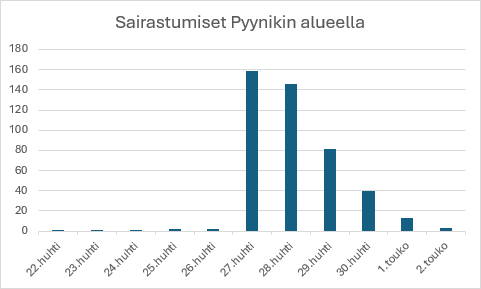
Tampere City Environmental Health and Pirha's Communicable Disease Control are continuing to investigate the cause of the stomach flu outbreak in the Pyynikki area. As of Friday 2 May 2025, the city's Environmental Health Department had received reports of around 450 people infected in the Pyynikki area.
In order to find out the cause of the outbreak, people who have been affected by the stomach flu are asked to answer a survey, the link to which can be found at the end of this news item. The survey is in Finnish and the purpose of the survey is to determine the source of the illness. Responses are also sought from people who live in Pyynikki but have not been fallen ill.
The water is safe to drink and can be used as normal
The tests carried out on 1 May 2025 showed that the water samples were clean, so the tap water is safe to drink. The peak of the epidemic occurred between 27 and 28 April 2025, after which significantly fewer cases have been reported. The causes of the outbreak will continue to be investigated.
– Based on the course of the outbreak, the investigations by the health protection and food control authorities and the samples examined, it strongly suggests that the infections are not coming from drinking water or food, says Satu Virtaranta, Food Safety Manager.
The stomach flu outbreak and its causes are being investigated by the health protection, food and health authorities working together.
Examinations of those affected have revealed the presence of norovirus. Less than ten elderly people have needed hospital treatment due to poor general health, but no serious infections are known to have occurred.
– During the acute phase, it is advisable to avoid public places, and people who are ill should take care of good hand hygiene, says Sirpa Räsänen, epidemiologist of the Pirkanmaa Welfare Region.