
Neighbourhood work creates safer environments through presence and connections
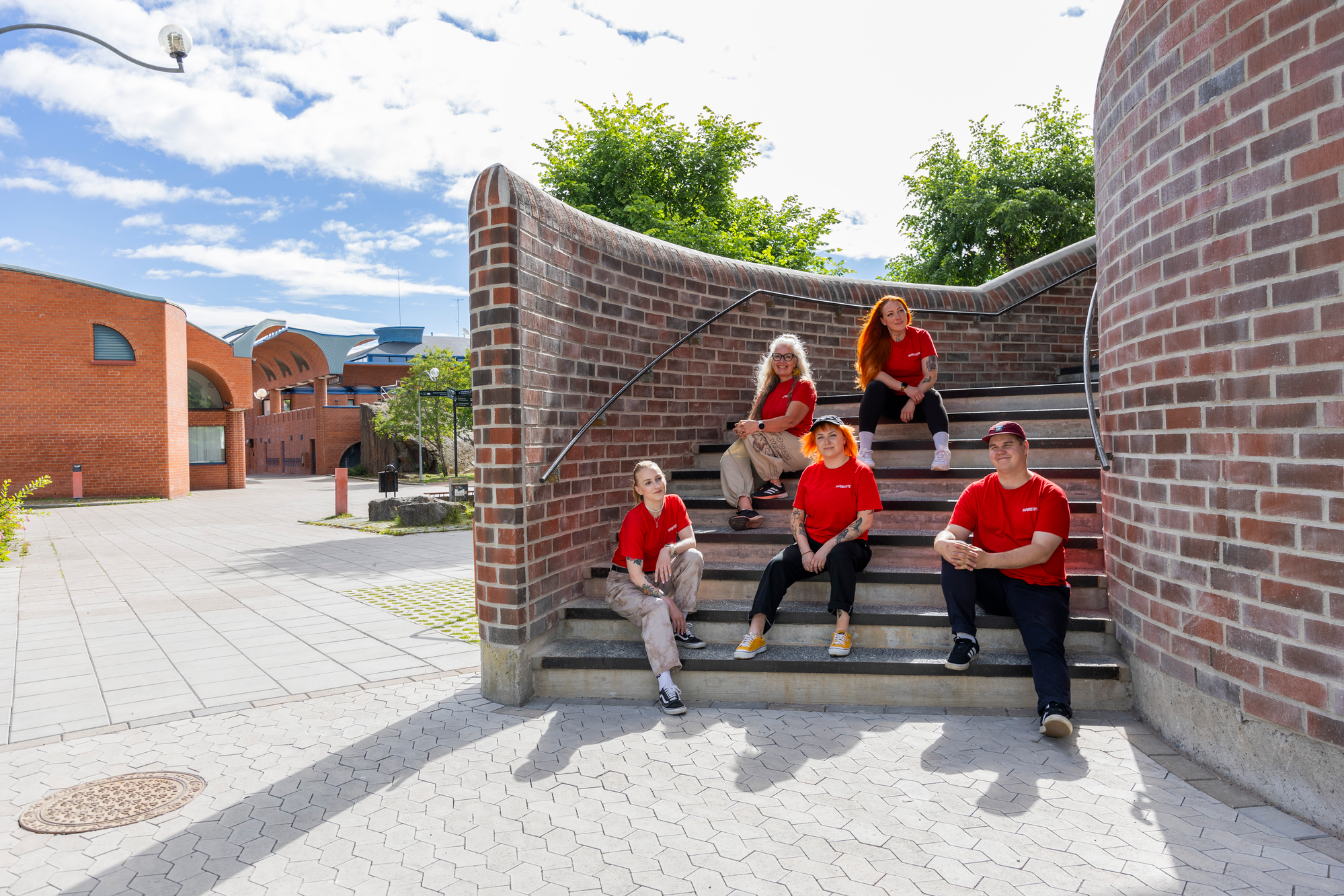
Neighbourhood workers, recognisable in their red jackets or shirts, have already become familiar faces to many people who work or spend time in the Tulli and city centre areas. But what do these “red-clad” workers actually do? They are present and engage with people: they talk, listen, observe, and pass on information where it can have a positive impact on urban safety.
Neighbourhood work invites everyone to participate on equal terms: residents, people who spend time or work in the city, businesses, communities, and other stakeholders. The guiding principle is that everyone is welcome to contribute to building a safer, more community-oriented urban environment.
A presence and everyday conversations in the Tullintori area
Neighbourhood work in Tampere began in late 2024. The initial focus was the Tullintori area, as city surveys and observations indicated a particular need to improve the sense of safety there. The initiative has been active from the outset, and over the past six months there have been clear signs that the neighbourhood outreach work is having a positive impact.
– You can see it, for example, in how businesses and other organisations have become involved in very concrete ways. They have made a real commitment and put their own reputation behind it, says Petri Niemelä, a neighbourhood worker in the Tulli area with Tampereen A-Kilta.
The most visible example so far was the Tulli community work and volunteering day held this spring. Almost all local stakeholders took part, including major operators such as the Tullintori shopping centre and local hotels. During the three-hour event, around 300 people attended, creating a lively, almost festival-like atmosphere along Sumeliuksenkatu.
From the very beginning, it has been clear that neighbourhood workers treat every person with respect and meet them on their own terms. The language used to talk about people is also important. Respectful language is contagious – just as derogatory language can be.
– Perhaps this needs to be emphasised particularly in conversations with people who use substances harmfully: it makes a significant difference how they speak about themselves, notes Tiina Salahub, a community worker in the Tulli area with the A-Clinic Foundation.
The presence of community workers and their informal conversations with people who use substances have also encouraged other residents to engage in more equal and respectful interactions – for example, simply greeting people or asking how they are doing. In areas where such interactions have taken root, disruptive behaviour has decreased.

Community work in downtown Tampere
Neighbourhood work on Hämeenkatu and in the surrounding areas began during a five-month period in summer 2025 and will continue again this summer. The first phase focused on making observations and getting to know the area and its people. Business owners reported that while most of them did not personally feel unsafe, they were aware that others did, and some were concerned on behalf of their customers.
– We focus on addressing behaviours that may create a sense of insecurity. Over the course of last summer, we observed a shift in attitudes: people are welcome to spend time in the city centre as long as they are considerate of others, says Verna Kivistö, a neighbourhood worker in the city centre from the A-Clinic Foundation.
– Our work is very much about being present at the grassroots level, listening, sharing information, and believing that change is possible, says Annika Strand, a neighbourhood worker in the city centre with Tampereen A-Kilta.
Exploratory phase in three neighbourhoods
Neighbourhood outreach began in May in Hervanta, Annala, and Kaukajärvi. Funded by the Ministry of Social Affairs and Health, the programme will continue until autumn 2027. The work is still in its early stages, focusing on exploring how neighbourhood work can strengthen community spirit and improve the sense of safety in these areas.
– We are out in the neighbourhoods observing and raising awareness about our work. As we are working across three different areas, it naturally takes time, says neighbourhood worker Anni Rintamäki from the A-Clinic Foundation.
– There is a large number of associations and activities in Hervanta, Annala and Kaukajärvi, so we are getting to know them and looking for opportunities for collaboration, says Akseli Rautalahti, a neighbourhood worker at Tampereen A-Kilta.
Hervanta, Annala and Kaukajärvi were chosen as focus areas for neighbourhood work primarily because they are much more distinctly residential than areas such as Tulli or the city centre. Engaging residents in activities is interesting in many ways. In addition, these areas are targeted for district development and are conveniently located next to each other.

Strong networks and continuity are key
Neighbourhood workers are the most visible part of the work when they are out and about in their areas, engaging with people. Less visible, but just as essential, are the support structures and networks behind the work. In Tampere, the steering group of the "Rikotaan kaavaa" project (Breaking the mould project), which develops neighbourhood work, brings together representatives from the city, the police, the wellbeing services county and businesses.
– I don’t believe our work would be possible in its current form without such a broad-based support group. We bring them observations from the field, and they are able to take issues forward within their own organisations. The cooperation has been very smooth, says Niemelä.
One of the key prerequisites for successful neighbourhood work is continuity. If the work is carried out in short-term projects, one initiative at a time, it cannot deliver its full benefits. Meeting people and building trust are at the core of neighbourhood work – and that, above all, requires a long-term approach.
– People who use substances in a harmful way often have so many negative experiences of authorities and projects that they do not easily trust new people, says Salahub.
– But when that encounter happens – when a person feels heard and is able to talk as an equal – it can be a significant and meaningful experience, Niemelä adds.


