Tampere is a growing and diverse city, where more and more families with children come from different linguistic and cultural backgrounds. In the city's early childhood education and pre-primary education, multiculturalism and interculturalism are reflected in everyday life: children are encouraged to explore different languages, cultures and beliefs.
Children are also shown the diversity, changeability and intercultural links within cultures. Staff model positive encounters and build a climate of open discussion and learning together.
– We see diversity as an asset. The role of early childhood education and care is to support children's cultural competence and strengthen their interaction and expression skills, says Tanja Moisala, Regional Director of Early Childhood Education and Care in the southern region of Tampere .
An everyday life that strengthens cultural identity
Every day, Tampere's early childhood education and care creates moments where children can share their own traditions and learn about the customs of others. Cultural diversity is naturally reflected in games, celebrations, meals and other everyday situations.
In line with the national core curriculum for early childhood education and care, children practise interacting with different people and listening to, recognising and understanding different views. The right to one's own language, culture, beliefs and religion is a fundamental right that is systematically promoted in early childhood education and care.
Identity is made up of many cultural factors which can overlap and intermingle. Children are helped to recognise these elements that make up their identity. At the same time, early childhood education and pre-primary education takes into account what families themselves want to bring out of their background and cultural heritage, so that the individual story of the child and family is seen and valued.
The social worker's specific skills support families and integration
In addition to teachers and childcarers, Tampere's early childhood education and care services employ social pedagogues with specific skills such as promoting a sense of community among children, preventing social problems, supporting families and signposting them to services. The new regulation, which will come into effect in 2030, will increase the number of highly qualified staff in day-care centres, which will also strengthen the role of social workers.
For families with children who have just moved to Finland, the service system may appear unclear, and the role of an early childhood education and care centre as a local community is significant for both the child and the family in terms of integration. In these situations, the social worker's knowledge of the social, health and education service system and service guidance are particularly important.
– Early childhood education and care can be a crucial support network for integration. When the family is supported in understanding everyday services and the child has access to a safe group environment, integration progresses on many levels.
The Edufirst project is developing accessible early childhood education and care
The Tampere City is part of the European Erasmus+-funded Edufirst project, in which the city is working with the Universities of Milan, Barcelona and Vic. The project looks at the quality, availability and accessibility of early childhood education and care in different cities and how it could be improved. The project aims to support families and children from disadvantaged socio-economic backgrounds. The project seeks to find ways to support children's future and reduce the impact of socio-economic background.
The project has visited early childhood education and care centres in cities and exchanged experiences on topics such as family services for children, service guidance and multiculturalism. In Tampere, the visitors visited the Vuores early childhood education and care centre, the Linnainmaa open early childhood education and care centre and the organisation of evening and day care at the Etelä-Hervanta early childhood education and care centre. In Barcelona and Milan, they visited early childhood education and care centres and family clubs. Daycare facilities are scarce in these cities and family clubs have been used to support networking between guardians and family life. In Italy and Spain, compulsory schooling for children starts at the age of three, but there is little access to services before the age of three.
– International cooperation has highlighted the uniqueness of the child's subjective right to early childhood education and care. We in Finland have reason to be proud of this, as well as of the high quality of early childhood education and care throughout the country, says Moisala, who is involved in the project.
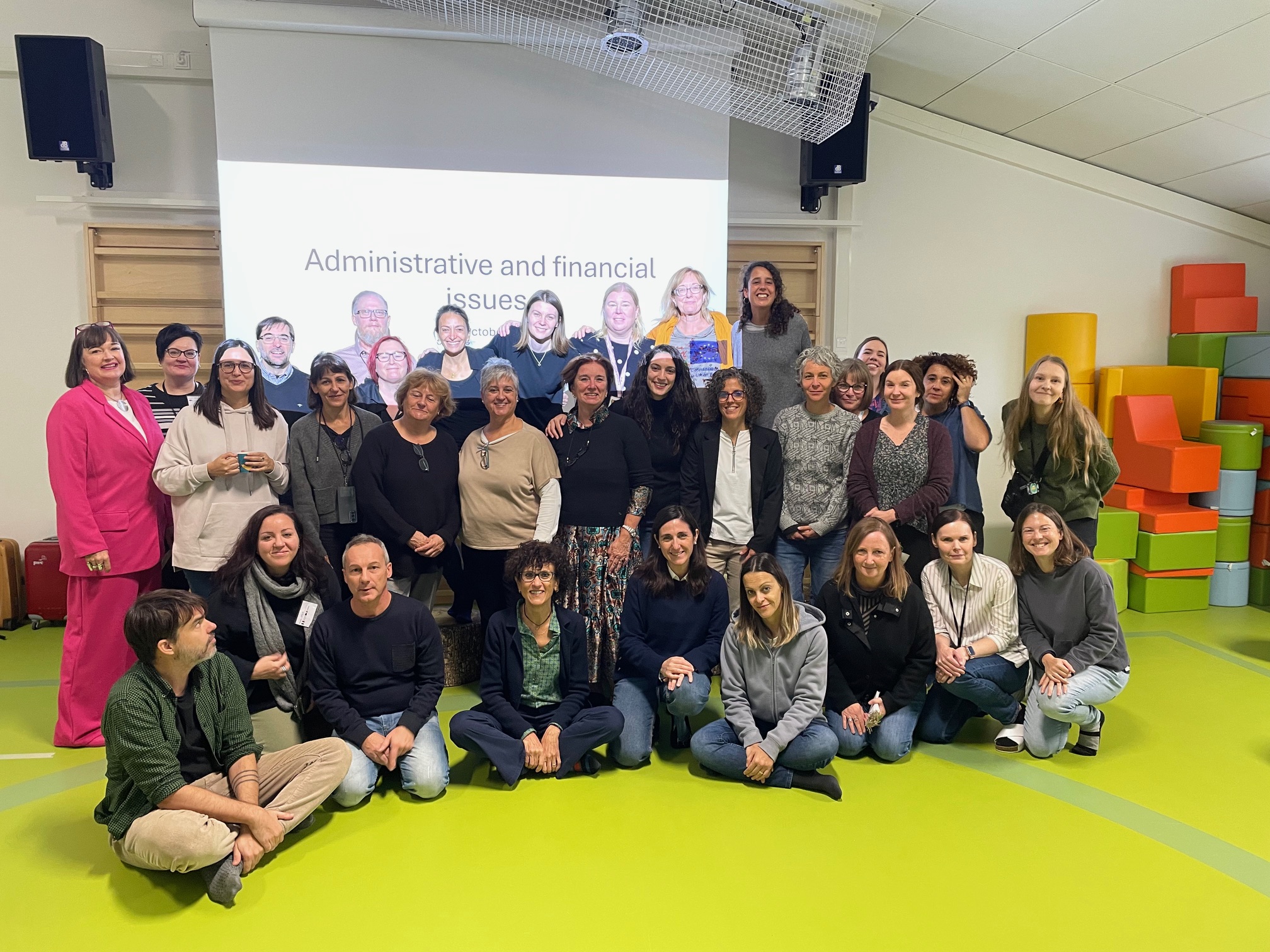
Most recently, the Edufirst project enabled social pedagogues in early childhood education and care in Tampere to participate in a two-day training course on cultural and religious awareness in early childhood education and on supporting family integration.
– The trainings opened up new perspectives on everyday work and also provided concrete tools to support the work of social workers.
Towards an equal start for all children in Tampere
Tampere believes that early childhood education and care plays an important role in families' everyday lives and integration. A trusting educational relationship between family and early childhood education and care can be established when the family feels seen and heard. In this way, the child's path in early childhood education and care is also built on a secure and equal footing.
– It is important to us that every family feels part of the Tampere community from the very beginning. Multiculturalism is part of our city's present and future, and we want to nurture it in early childhood education and care, sums up Moisala.