The City of Tampere has announced plans to build a 24‑place housing unit for people with intellectual disabilities on Laurinahonkatu in Lamminpää. The plot is currently occupied by an industrial building, which has been granted a demolition permit for November 2025. The construction requires an exemption from the current zoning plan, which only allows non‑disturbing business activities on the site. The Urban Environment Committee approved the exemption on 3 March 2026.
The Tampere Disability Council has been shocked by the public debate surrounding the planned housing unit.
Some local residents oppose the construction of the housing unit in Lamminpää. According to media reports, neighbours fear that disabled residents would cause noise, disturbance and a decrease in property values.
This is an example of the so‑called NIMBY phenomenon. NIMBY is an abbreviation of “not in my back yard”, referring to situations in which residents oppose developments in their neighbourhood that are generally considered beneficial but which they personally perceive as disruptive.
– I want to believe that only a small number of neighbours would react with such prejudice and contempt towards their future neighbours, says Katja Metsävainio, Chair of the Disability Council.
The UN Convention on the Rights of Persons with Disabilities (Article 19) guarantees disabled people the right to choose their place of residence, their living arrangements and the people they live with, on an equal basis with others. The Convention requires community‑based living, where disabled people have access to services and the right to live independently as part of the community, rather than being isolated in institutions.
– Housing is a fundamental right. A disabled resident of Tampere has the same right as anyone else to decide about their own life, the support they receive and the environment in which they live, Metsävainio emphasises.
Lamminpää now has a valuable opportunity to show itself as a community‑minded, diverse and humane part of the city – a place where all residents are welcomed as they are, without fear of judgement or belittlement.
Positive experiences of neighbours with intellectual disabilities in Rahola
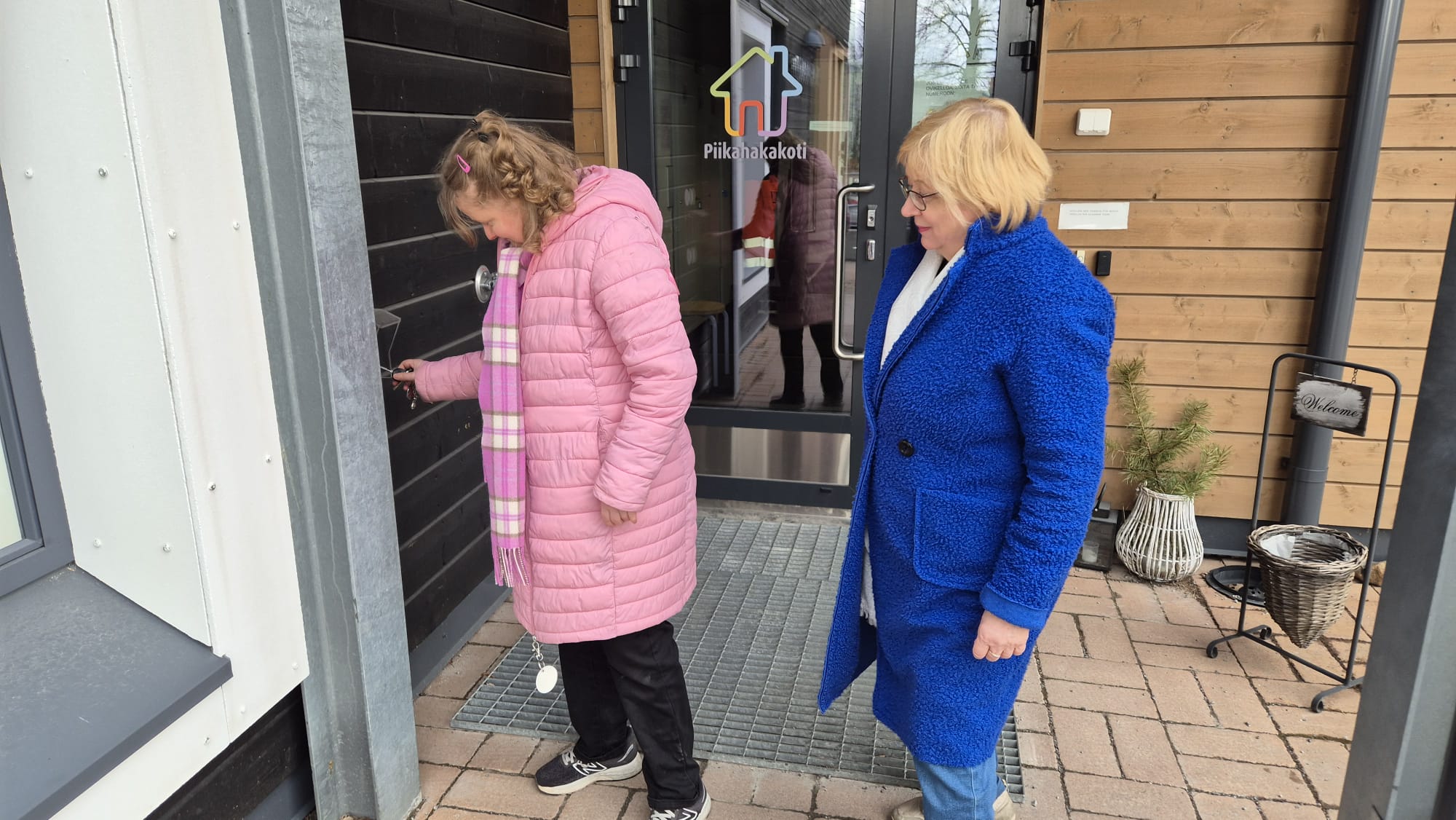
Tarja Mesiä is a member of the Tampere Disability Council. Her daughter, Laura Mesiä, lives in the Piikahaka housing unit in Rahola, which is intended for adults with intellectual disabilities.
In Rahola, there has been nothing like the inappropriate and hurtful reception seen in Lamminpää. Tarja Mesiä is surprised by some of the attitudes expressed by residents living near the planned housing unit in Lamminpää.
– Personally, I don’t know many people as friendly and positive as those in my daughter Laura’s circle of friends and the residents of her home – not to mention Laura herself, Mesiä says.
– Those who are able to express themselves verbally ask me every time how I am doing. I am always treated politely and kindly. I feel that the reactions in Lamminpää must stem from a lack of knowledge and fear of the unfamiliar, she continues.
As a mother of three, Tarja Mesiä is grateful that her daughter with an intellectual disability also has the right and opportunity to live an independent life in her own way, just like her siblings.
– As a family, we are thankful and happy with how things are organised in Tampere, and we hope that homes like Piikahaka will be available to all young people with special needs. I believe they would bring not only diversity but also positivity to Lamminpää, she says.
Human rights and fundamental rights belong to everyone
The Tampere Disability Council emphasises that human rights and fundamental rights must be taken as a given. Discrimination, including on the basis of disability, is prohibited by the Constitution.
– If individuals hold such deeply discriminatory views about other people, they must learn to move away from these patterns of thinking. General education and good manners include respecting and valuing people as they are, says Non-discrimination Coordinator Mikko Ala‑Kapee, who serves as the presenting secretary of the Disability Council.
Around 30,000 people in Tampere live with various mobility, sensory, intellectual or functional disabilities. The City of Tampere – including the district of Lamminpää – must be a safe and respectful home for disabled people and for everyone, regardless of background.