
National preparedness day will be observed on Saturday 7 February
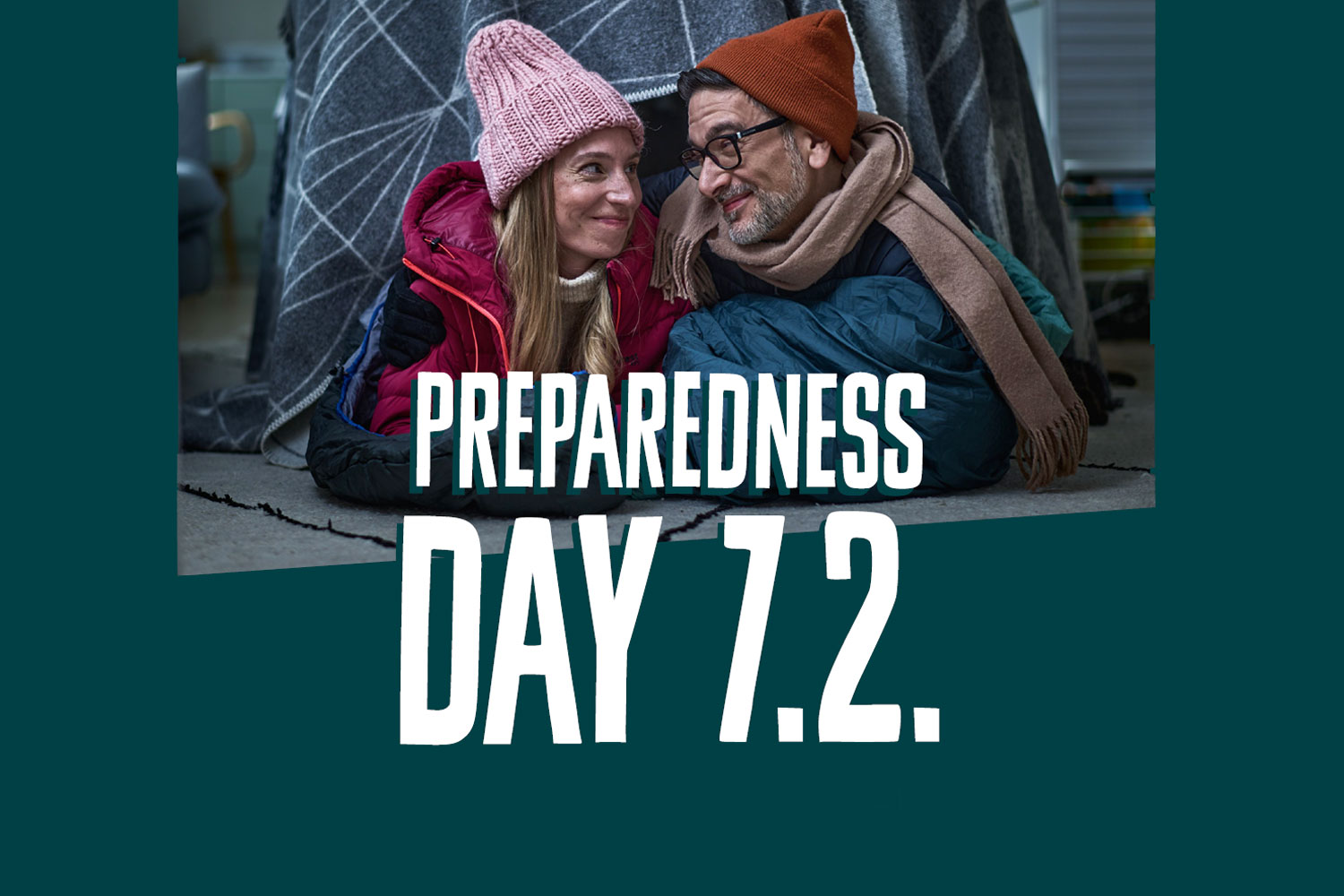
Self-directed preparedness is a civic skill that supports the functioning of both individuals and society. Even small measures can improve everyday safety and help households manage potential disruptions with greater calm.
Preparedness reduces vulnerability
Preparedness supports continuity in everyday life. It reduces a household’s vulnerability in situations where there may be power outages, disruptions in water supply, interruptions in telecommunications, as well as storms or other weather-related events. When households prepare in advance, the impacts of disruptions are less severe and recovery is faster.
Preparedness means taking steps ahead of time – such as making your home emergency supply functional, learning different ways of operating in exceptional circumstances, and developing one’s own skills. A sense of safety increases and uncertainty decreases when one is well prepared.
In addition, household preparedness strengthens society’s overall resilience. When households can cope independently during the initial phase of a disruption, authorities can direct assistance to those who need it most.
Preparedness skills can be learned
The theme Preparedness is also a skill underscores the abilities that help people manage unexpected disruptions. These skills include, for example, knowing how to use a camping stove, giving first aid, handling fire safely, purifying water, and staying warm without electricity.
Across Finland, a wide network of organisations provides training and guidance for developing preparedness skills. Participating in courses is an easy way to enhance one’s personal safety competence.


