
The history of Tampere’s rainbow community – share your memories of the city’s queer past
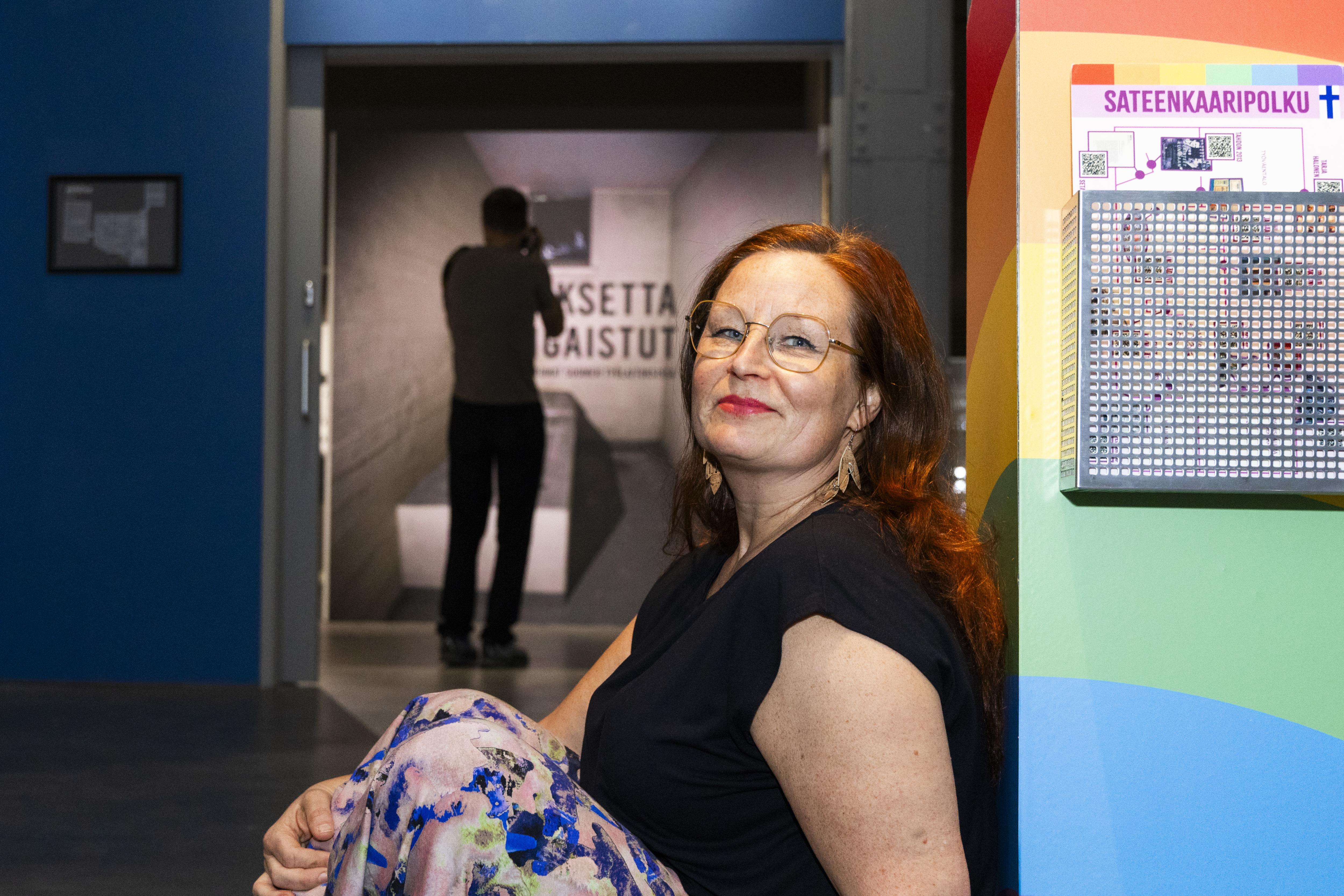
The Finnish Labour Museum Werstas in Tampere has been collecting material related to the lives of sexual and gender minorities since 2010. According to Ulla Rohunen, Head of Public Services, it is important for the museum to document Finnish cultural heritage in a diverse and inclusive way.
– Rainbow materials have been fragmented and difficult to document. They tell a story that has unfolded alongside the official historical narrative.
So far, the collection mainly consists of material related to public activity, such as events organised by associations, while there are fewer personal memories from private life.
The museum is hoping to expand the collection with more objects and photographs – and above all, memories. In particular, it is seeking material on LGBTQ+ history from more than 50 years ago, as well as material relating to trans people, but it also aims to document contemporary LGBTQ+ lives.
– The items documented by the museum serve as evidence. What matters most is what the object tells us and the story connected to it, Rohunen says.
The diversity of gender and sexuality has been an integral part of Tampere’s diversity since the beginning of the city.
It was difficult for a lesbian to find a partner
One might expect there to be more material, as Tampere has always had people who could be considered to have belonged to sexual and gender minorities.
In the early and mid-20th century, men attracted to other men met in outdoor cruising areas. In Tampere, popular places included Koskipuisto, the areas around Hämeensilta and Satakunnansilta bridges, and Eteläpuisto, says Tuula Juvonen.
Juvonen is a University Lecturer in Gender Studies at Tampere University. She has researched, among other things, gender and sexual diversity and the emergence of lesbian and gay communities in Tampere.
She recounts a true story from the late 1950s. A young man moved to Tampere. A colleague immediately warned him: whatever you do, don’t go to the end of Hämeenpuisto, because that’s where the “homos” are. The man was delighted – now he knew where to meet people like himself. After work, the young man walked hopefully around Näsinpuisto. It was quiet.
Only later did he learn that gay men actually met at the other end of Hämeenpuisto.
In the 1960s, the boldest began going to Tillikka restaurant. The theatre restaurant staff were tolerant, and gay men even had regular tables of their own. More generally, theatre circles have long been characterised by an accepting attitude towards different ways of living.
The chances of a lesbian meeting another woman in a bar or out in the city were very low. In Finland, women could not go to a restaurant without male company even in the late 1960s. A woman alone or a pair of women moving around the city would easily attract unwanted attention from men. For this reason, lesbian networks and subcultures did not develop in the same way as those of gay men.
Where, then, did lesbians meet? Often in workplaces. Tampere had many female-dominated workplaces, such as factories and hospitals.

A bar open to everyone was a step forward
A major change took place in the early 1970s, when Vagabondi ry – now known as Sinuiksi ry – was founded in Tampere. It began organising private events for the LGBTQ+ community, mainly dances. The venue changed frequently: bookings were often refused once landlords realised who had hired the space.
After a few years, Vagabondi gained access to a clubroom on the fourth floor of Työväentalo.
– They themselves called the space Hinttivintti – the ‘queer attic’. The curtains were kept closed so that people in the building opposite couldn’t see who was attending the dances, Juvonen explains.
There was a real need for private events. At the time, there was no legislation prohibiting discrimination in Finland, so a male couple behaving affectionately in a restaurant could be thrown out.
At the turn of the 1980s and 1990s, evenings known as Gay Disco Zip began at the Merirosvo restaurant at the foot of the Näsinneula tower. The average age of visitors began to fall.
A major step forward came in January 1990, when the nightclub Mixei opened. It is Finland’s oldest LGBTQ+ bar still in operation.
Other LGBTQ+-friendly restaurants also operated in Tampere during that decade. Nice Place, located near the Metso public library, was particularly popular among lesbians.

It was easier to breathe in Tampere
Tampere has always attracted LGBTQ+ people from smaller towns: in a larger city, it is easier to breathe and new possibilities open up.
– Tampere has been bolder and more rough‑edged than Helsinki. For example, the Leimari parties, open to everyone, were launched here as early as 1988. They are the oldest continuously running lesbian and gay event in Finland, Juvonen says.
Manse Pride is celebrated in June, and its role in creating visibility is significant. According to Juvonen, it is especially important for young people to see that there are lesbians, gay men and trans people of all ages, sizes and backgrounds.
Things were very different in the mid-1990s, when Juvonen herself would sit in Nice Place.
– We were all in our twenties or early thirties, wondering what would become of us. It felt as though we were flying blind into the unknown. No one knew an older, working, self‑sufficient lesbian who was also in a long-term relationship.
Today, Tampere is an open and accepting city. Pride events give space for a variety of voices to be heard.
Different kinds of voices can also be heard in online comment sections during Pride. Juvonen has grown tired of the remark: “Do they have to push it everywhere?”
– It isn’t being pushed everywhere – it has always been everywhere. The diversity of gender and sexuality has been an integral part of Tampere’s diversity since the beginning of the city. That is why there is no reason to keep silent about it.
Donate material to the museum
The Finnish Labour Museum Werstas collects objects, photographs and related stories connected to sexual and gender minorities. Please contact the museum before sending any material. For more information: How can I make a donation?
The Finnish Labour Archive in Helsinki also collects archival material related to LGBTQ+ history. Contact: [email protected].


