
Schools need joy, appreciation and perseverance
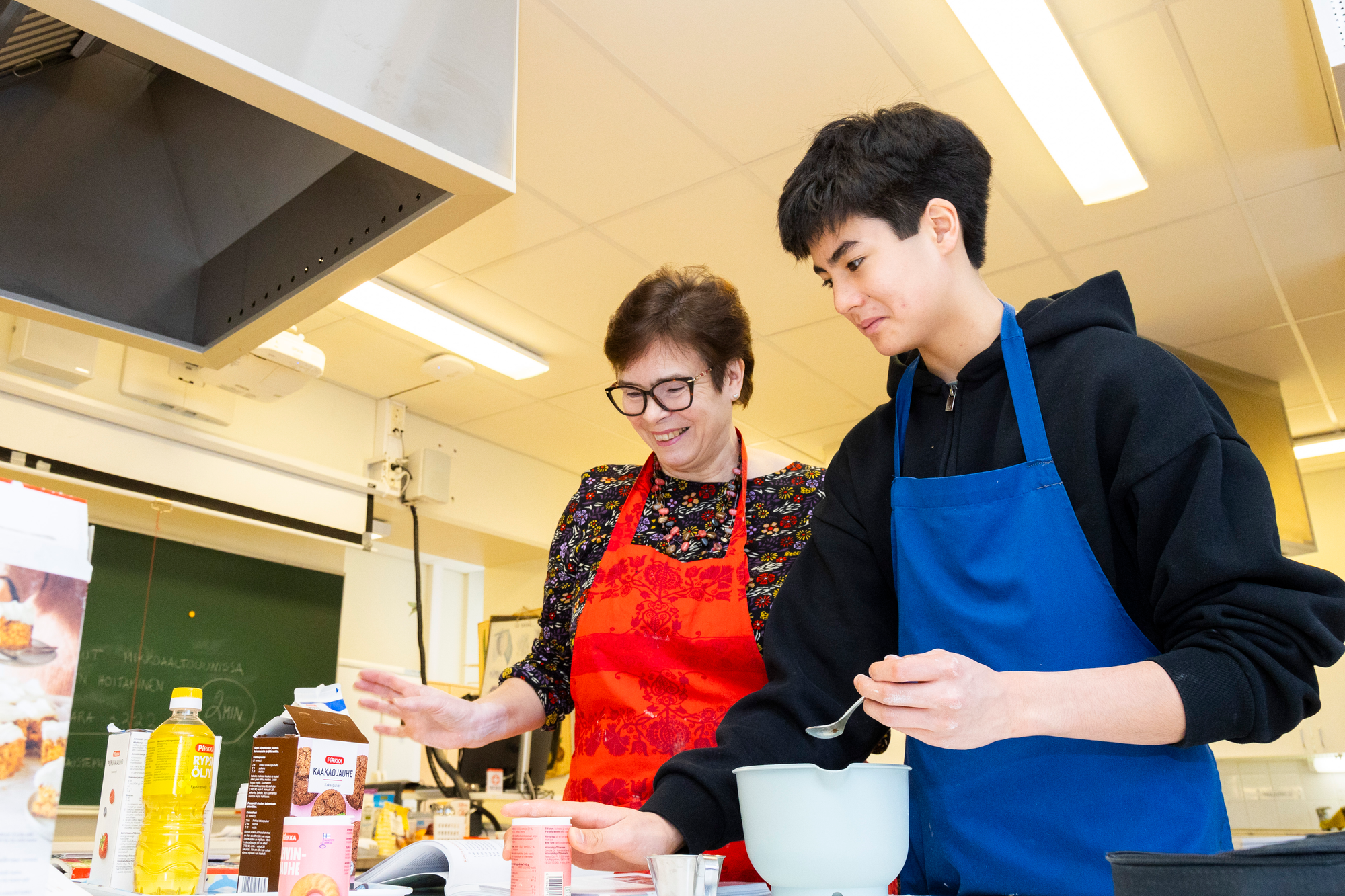
The City of Tampere’s new Education Path programme for early childhood education and care, pre-primary education, basic education and general upper secondary education (2025–2035) aims to ensure that every child and young person has the opportunity to grow and develop as themselves, fulfil their potential and take part in the community. The idea behind the programme has been warmly received by pupils in grade 7 at Wivi Lönn School.
The young people consider whether it is possible for them to be themselves at school and to learn in the way they want. Alongside friends, the most important factor is how teachers approach them.
– It’s important that teachers are kind to us, says Elia Koivula.
– I hope teachers try to understand what we’ve got going on at any given time, Eeri Blom continues. – That they don’t just assume, but ask and listen to us.
– And if needed, they give you space and don’t push in when someone wants to be left alone, Inna Sutinen says. – Teachers have a huge impact on what it feels like to come to school. If a teacher speaks kindly, it’s immediately nice. It always feels pretty good here.
This view is also shared by Martti Ahola. In his opinion, teachers at Wivi Lönni School mostly relate to pupils in an accepting way. According to Ealeena Devabandu, who is originally from Dubai, teachers are genuinely friendly. She and Adriano Gomez, who was born in the Philippines, have felt welcome and enjoy school.

Everyday school life is planned together with pupils – and parents too
The principal of Wivi Lönn School, Mika Luukkanen, understands young people’s views well. Good interaction is extremely important to him.
– Even more important than class size is how a teacher builds a relationship with pupils, Luukkanen says.
– It’s good that we have different teachers for different subjects. That way, every pupil is sure to find at least one important person at school – someone who sees them and meets them, says home economics teacher and form tutor of class 7E Tea Talonen-Lähdeniemi.
How teachers relate to young people also matters to parents. Talonen-Lähdeniemi feels it is important that communication with home always presents the young person as a whole – not just through a single incident.
– We want parents to feel confident and safe getting in touch with the school about anything related to their child.

A seamless path from early childhood education to adulthood
The city’s shared approach is also reflected in the new Education Path programme for 2025–2035. The document brings together goals from early childhood education and care all the way through to upper secondary education and into adulthood.
This holistic plan aims to transform the operating culture of schools and educational institutions. At the heart of it are learners – children and young people – and their future knowledge and skills needs. According to director of education Mari Palviainen, it is great that the new programme has such a strongly forward-looking perspective.
– Often we set out to fix something that is broken, but now we are looking ahead from a positive perspective – and far enough into the future, Palviainen says.
The idea of an education path is also seen as very positive by school professionals. Principal Luukkanen notes that transition points are simply places created by the system.
– Moving from grade 6 to grade 7 is a big deal, but there are only two months in between. The idea of a coherent path and of softening the transition phases is very welcome. With a shared programme, we both strengthen and enable cooperation from early childhood education and care through pre-primary and basic education to upper secondary education.
Teachers create the conditions for the joy of learning
Pupils in grade 7 at Wivi Lönn School know what kind of learners they are. Many learn best by doing and trying things out. Eeri Blom is one of them.
– I learn by doing things together with a friend, Blom says. – It’s nice to get to know new people, but when you force people to work together it usually just creates awkward situations.

Adriano Gomez and Martti Ahola are also hands-on learners. One of Gomez’s favourite subjects is home economics; he dreams of a career as an athlete. Ahola says he learns well, for example, by writing notes and through different activities. Rewards help too – more than sanctions.
– Maybe at school you could get a small reward if you’ve been working actively, Ahola reflects.
Inna Sutinen has found her own way of learning through her drawing hobby. She learns best with the help of colours, as colours support memory. Inna shows her notebooks, where different topics are colour-coded in different colours.
– We’ve also gone through different ways of learning at school, and I know some people have found it helpful, Sutinen says.
Wivi Lönn School has invested in finding each pupil’s own path and potential for a long time. Everyday school life is also guided by values work carried out together with pupils and parents. Through this, the school adopted its own key words: joy, appreciation, perseverance.
– Teachers and our other staff create the conditions for the joy of learning here at school. It grows in a safe atmosphere, for which the adults at school are responsible, principal Luukkanen notes.
What is the Education Path programme?
“The City of Tampere’s new Education Path programme for 2025–2035 aims to ensure that Tampere stands out as Finland’s leading education city, where every learner is met as an individual and as a member of the community. In Tampere, the aim is that every child and young person has the opportunity to grow and develop as themselves, fulfil their potential and take part in the community.”
The programme’s priorities emphasise a safe and caring learning environment, measures to support mental health and preventing bullying. Literacy and multilingualism develop throughout the education path, and children with a foreign-language background are supported in learning Finnish from early childhood education and care through to higher education. Digital solutions and artificial intelligence are used to support personalised guidance, while at the same time maintaining unhurried encounters and strengthening learners’ basic skills.”


